
By MPA
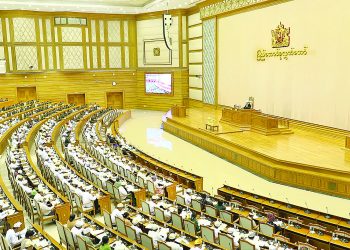
BANGKOK, Thailand — Myanmar’s administrative authority has permanently shifted away from the military junta’s stronghold of Naypyidaw, a powerful coalition of ethnic revolutionary organizations warned ASEAN, urging regional delegates to recognize the country’s decentralized political reality rather than pursuing outdated diplomatic assumptions.
The formal policy declaration was issued on Wednesday, 15 July 2026, by the Steering Council for the Emergence of a Federal Democratic Union (SCEF)—a high-level political alliance comprising the Karen National Union (KNU), Karenni State representatives, the Kachin Independence Organisation (KIO), and the Chin National Front (CNF).
The statement confirmed that SCEF leaders recently participated in a series of highly sensitive consultative meetings convened by the ASEAN Special Envoy on Myanmar and Philippine Foreign Minister, alongside the Royal Thai Government as the official host.
SCEF explicitly clarified that its delegates met with ASEAN representatives in a strictly exclusive capacity, emphasizing that at no point did they share a table or engage in joint talks with representatives of the ruling military junta. The council stated that the sessions were designed solely to exchange perspectives on the ground situation, assess the implementation of the regional Five-Point Consensus (5PC), and outline the indispensable prerequisites for a credible peace process.
During the closed-door sessions, SCEF representatives delivered a blunt critique of ASEAN’s ongoing diplomatic efforts, pointing out that the regional bloc itself has repeatedly admitted there has been zero tangible progress under the 5PC framework.
The council warned that continuously re-affirming the 5PC without enforcing concrete actions will do nothing to alter the grim realities on the ground. SCEF emphasized that any credible progress must begin with:
- The immediate and unconditional release of all political prisoners.
- Unrestricted, meaningful humanitarian access to conflict-affected civilians.
- The establishment of verifiable, practical mechanisms to halt military violence.
“We do not believe in dialogue merely for the sake of dialogue,” the SCEF stated in its manifesto, clarifying that the current engagements must not be misinterpreted as the start of formal negotiations with the military regime. “A dialogue that aims only to temporarily reduce physical violence while leaving the root causes—systemic military dominance, a highly centralized dictatorship, and the fundamental political crisis—untouched will never secure a sustainable peace.”
The alliance underscored that the military council has displayed absolutely zero genuine political will to resolve the crisis. SCEF noted that the junta’s public invitations to hold peace talks lack any verifiable commitment to constitutional reform, adding that the burden of proving genuine political intent lies squarely on Senior General Min Aung Hlaing and his command layer.
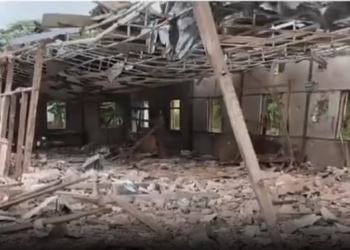
To build the bare minimum of trust required for meaningful negotiations, the SCEF stated that the military high command must immediately execute verifiable measures on the ground. These include an immediate halt to unprovoked airstrikes on civilians, an end to bombardments targeting schools, hospitals, and religious infrastructure, and the complete lifting of military blockades on humanitarian relief.
The council stressed that attempting to invite political opponents to negotiate while continuing to wage an unrestricted war on the civilian population is a profound contradiction that renders any dialogue meaningless.
The core of the SCEF’s warning to ASEAN focused on the fundamental shift in Myanmar’s governance landscape. The council detailed that the junta’s centralized administration has effectively collapsed across vast swathes of the country, replaced by localized, state-and-unit-based revolutionary authorities. These regional bodies now directly manage public safety, the judiciary, healthcare, education, and municipal services, representing the actual political will of their respective populations.
“Any credible peace process must formally recognize and directly engage with these legitimate local authorities,” the SCEF warned. “Continuing to design political frameworks based on outdated assumptions will fail to bring peace. Furthermore, any premature attempts by external actors to normalize relations with the military regime will only exacerbate the country’s deep political divisions.”
The council concluded that Myanmar is not yet ready to enter formal, structured peace negotiations. It advised that the immediate priority must remain focused on “political preparation”—allowing domestic democratic stakeholders to build a shared, nationally-owned understanding of the principles, structures, stages, and security guarantees of the eventual transition.
While acknowledging the supportive role of regional and international partners, the SCEF firmly reminded global diplomats that external entities have no right to dictate the direction, pace, or outcomes of Myanmar’s transition.
The alliance reaffirmed that the ultimate goal of the struggle remains the complete eradication of military dictatorship and the establishment of a genuine federal democratic union built on self-determination, equality, and civilian rule.