
By Ra Wai | MPA Indept PhotoStory
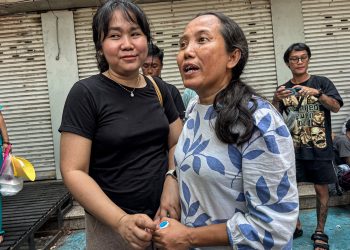
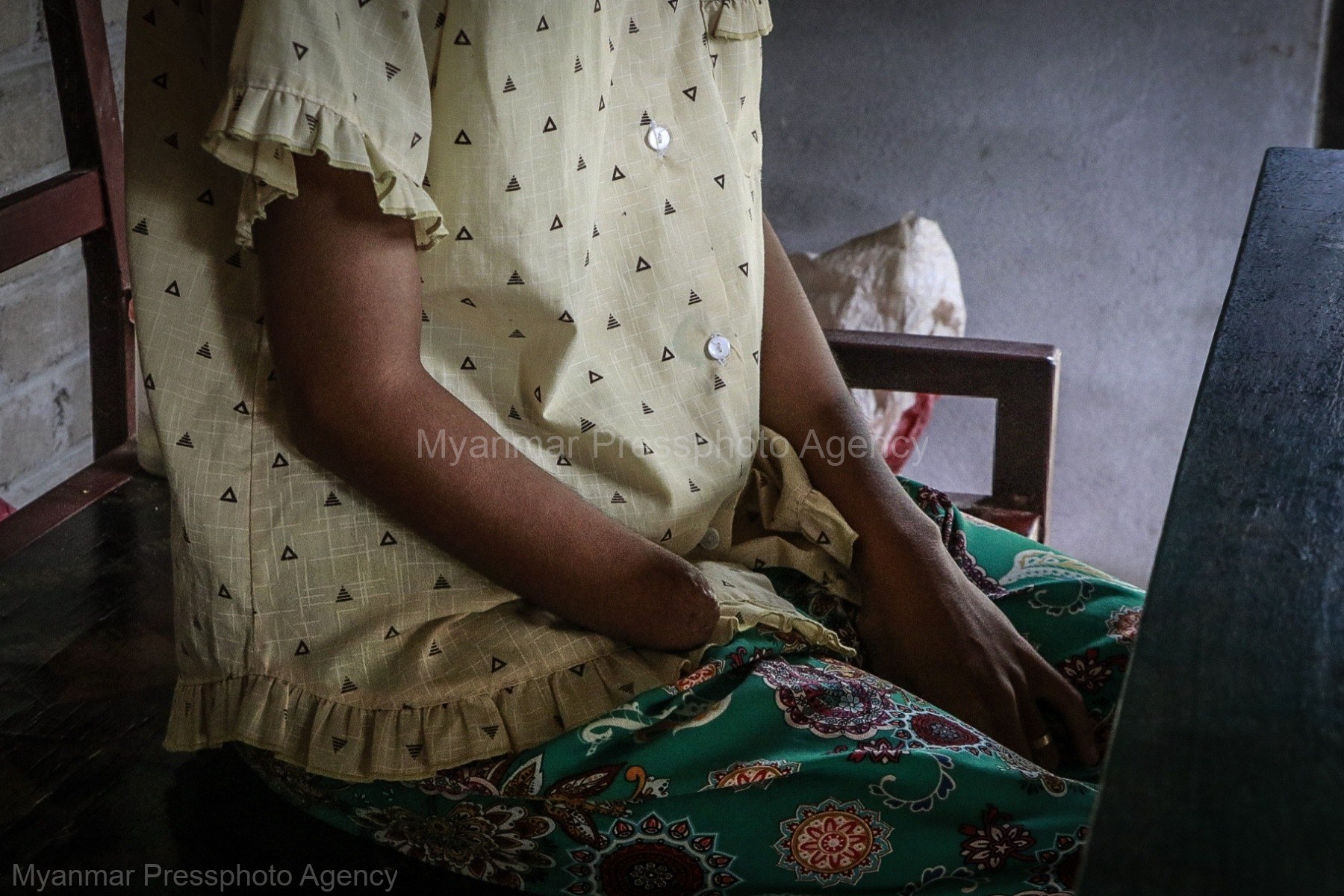
She looks away, her face clouded like an impending storm, and whispers that she no longer wants to go to school. A military airstrike claimed her right arm, from the wrist down.
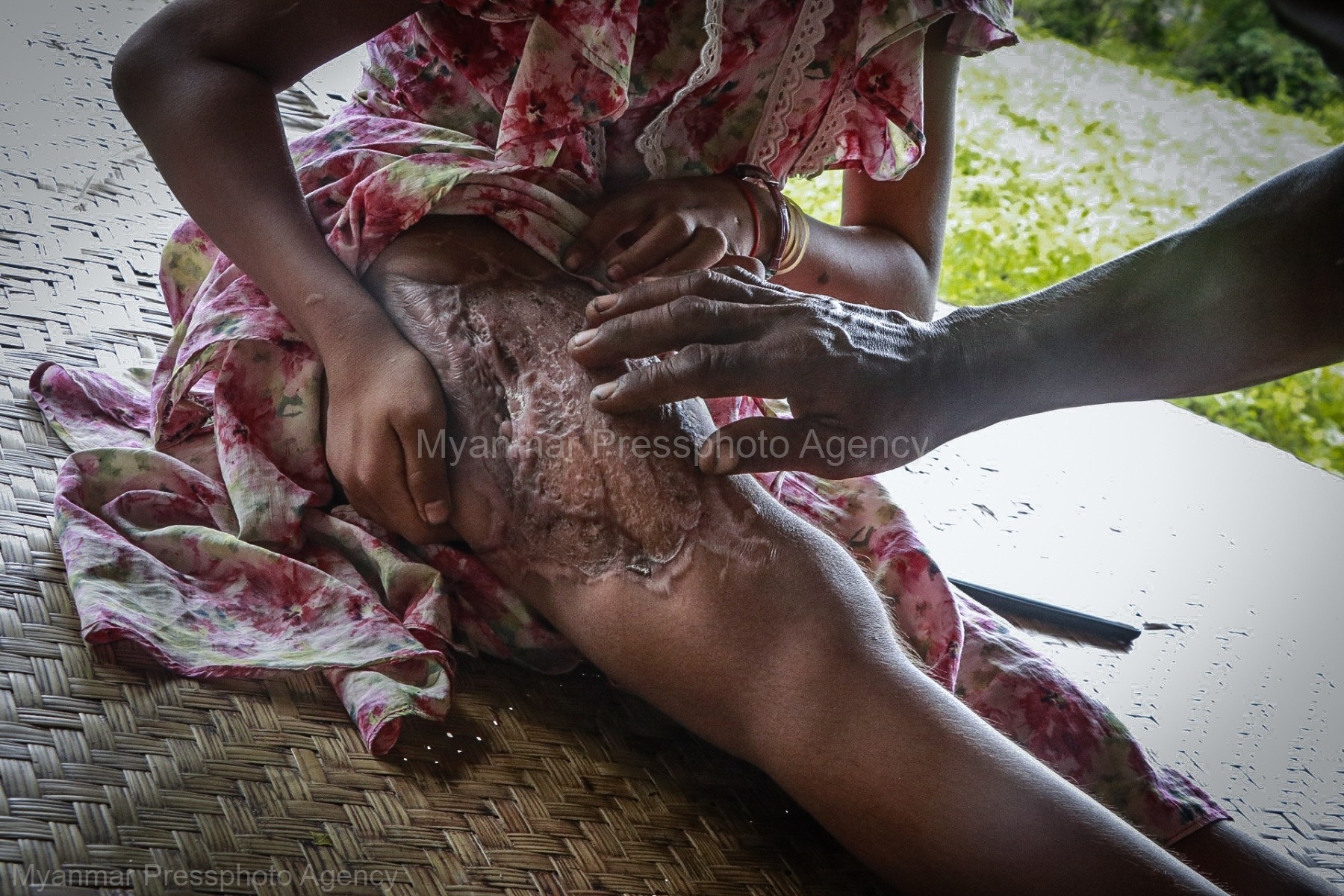
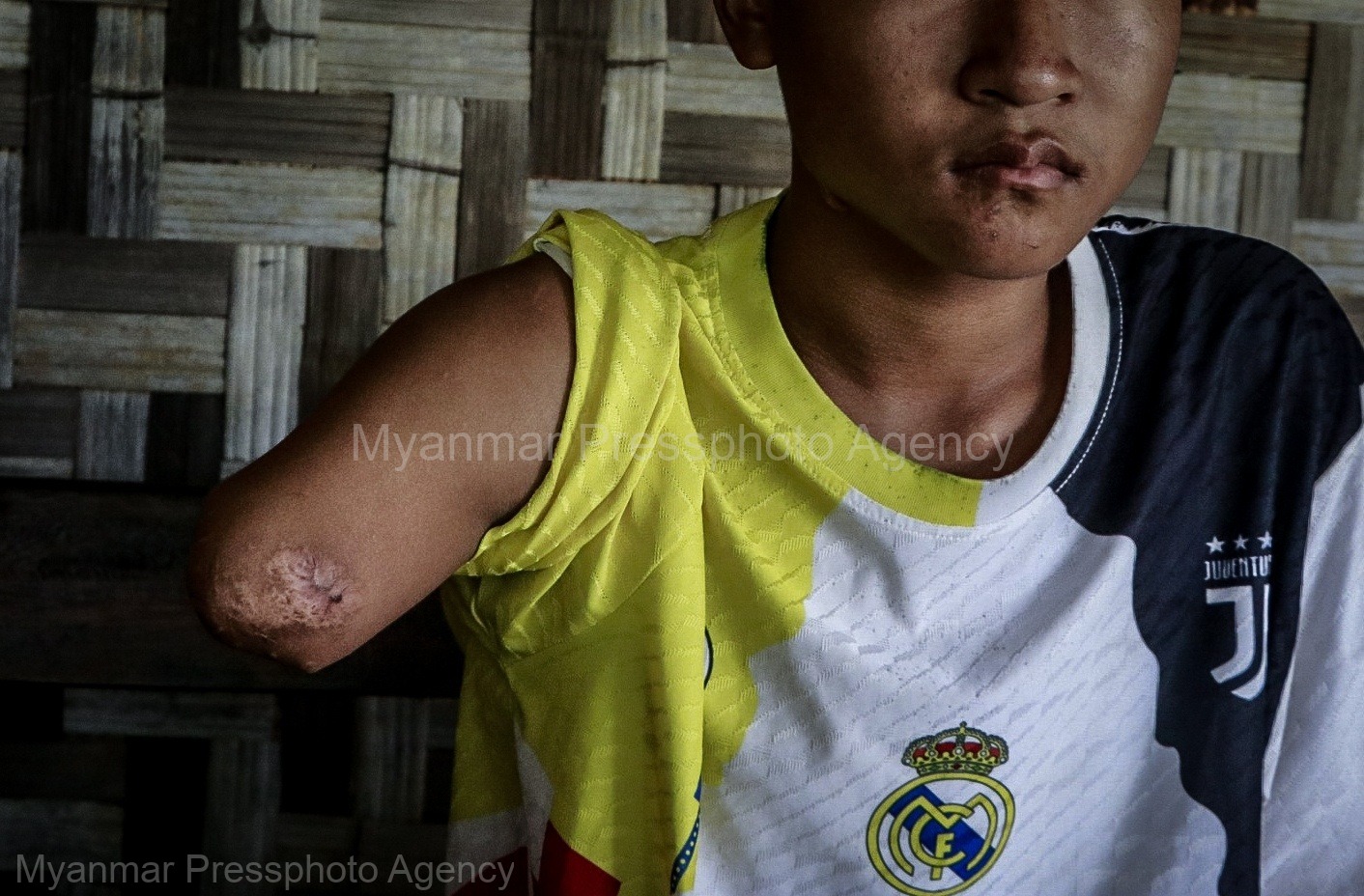
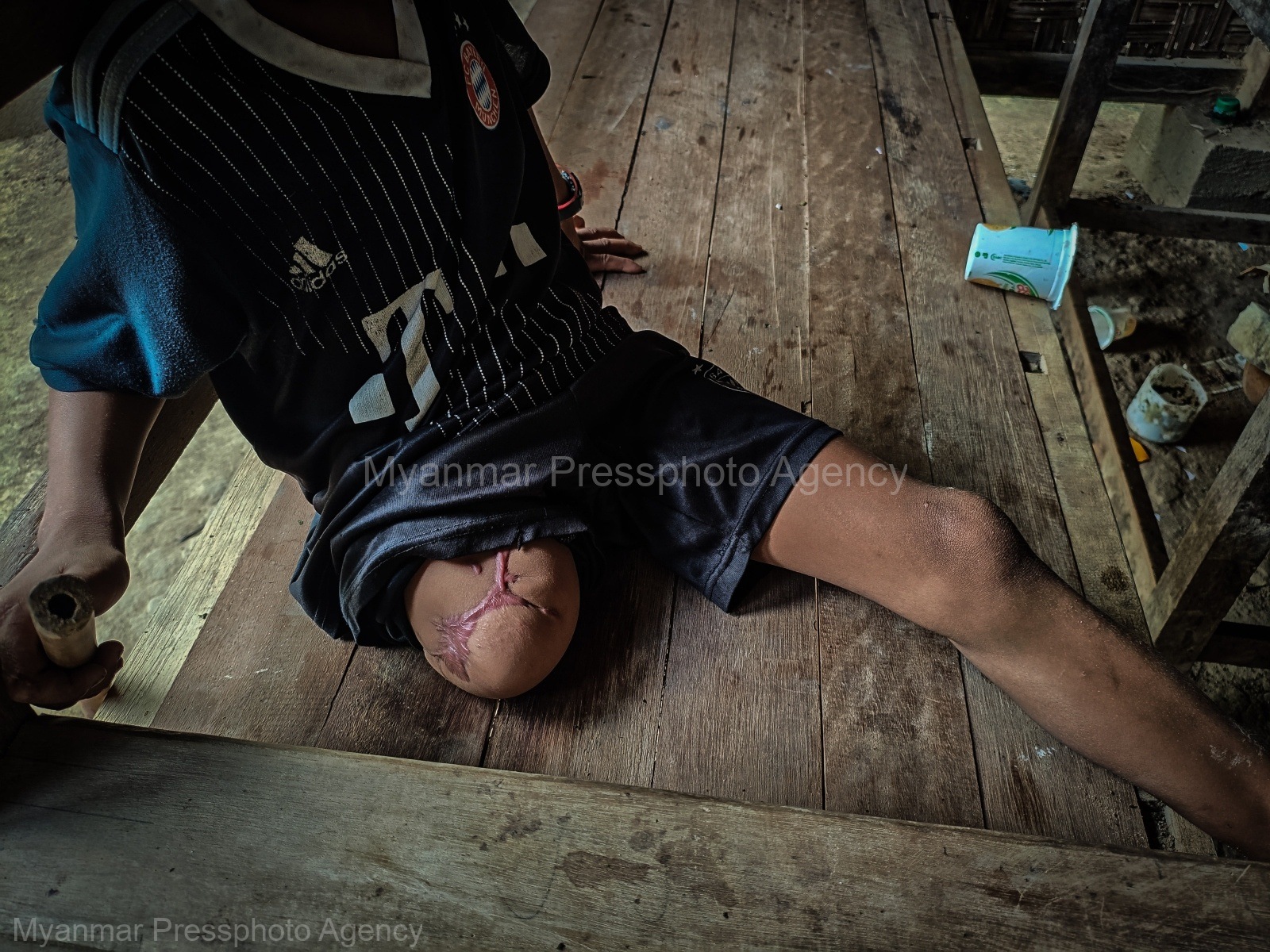
She is a Grade 12 student from the high school in O-tein-twin village, Depayin Township. On May 12, 2025, the melodic sound of students reciting lessons was shattered by the terrifying roar of incoming bombs. Despite the building being a clearly identifiable place of learning, the military dropped munitions that tore through the classrooms, tearing lives apart in an instant.
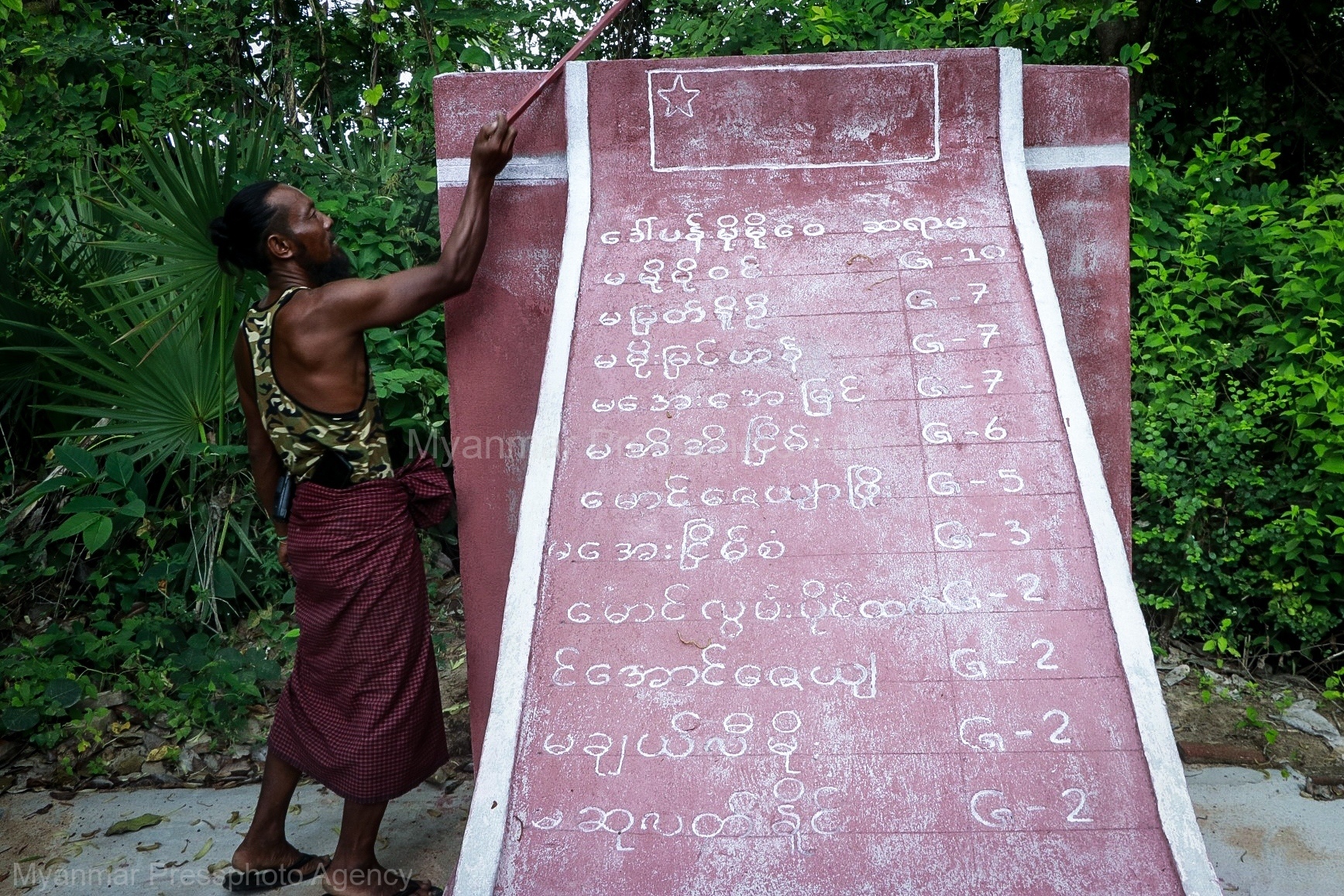
Two teachers and 22 students were killed. Around 120 others were injured, 13 of whom—students from Grades 2, 3, 7, and 12—suffered permanent amputations.
Though people try to encourage the young Grade 12 survivor, telling her that passing her exams this year will allow her to attend university online, she remains silent. Her eyes, staring into the distance, are shadowed with a trauma that runs deep.
The airstrike happened months ago, but the psychological wounds remain raw. The entire village refuses to walk past the front of the school. “They don’t dare to walk past, and they simply don’t want to,” explains U Mote Seik, the local defense force leader for O-tein-twin.
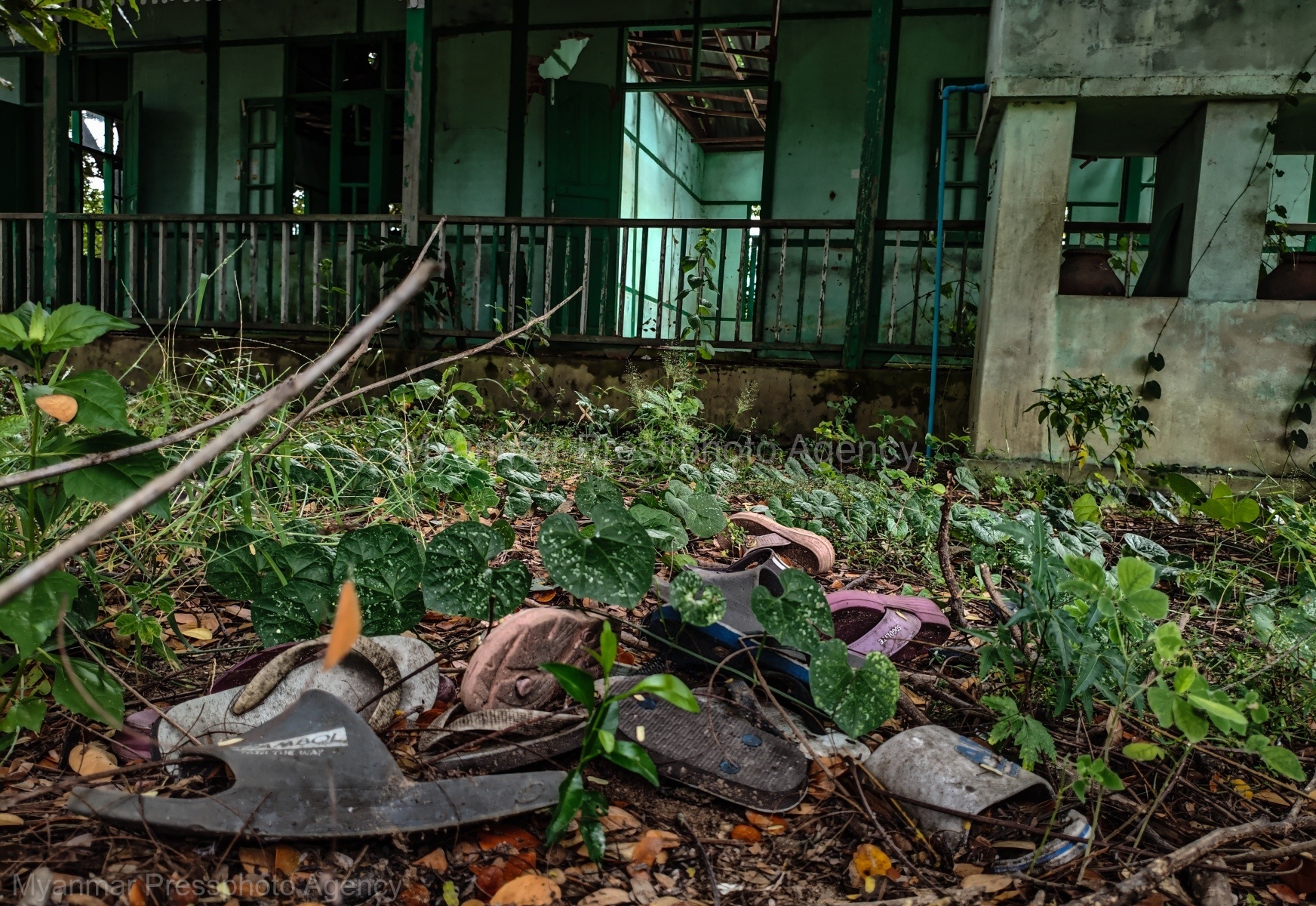
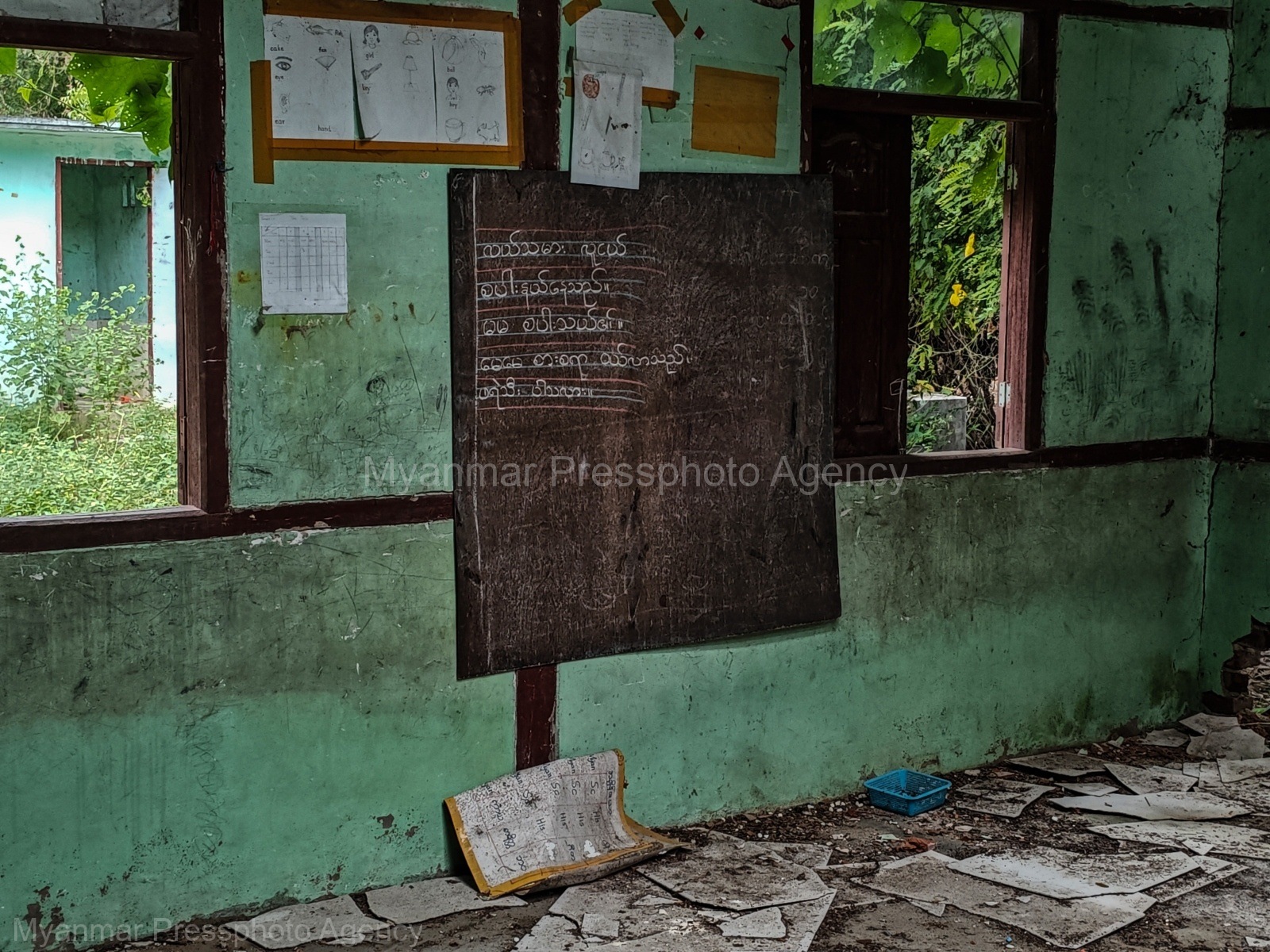
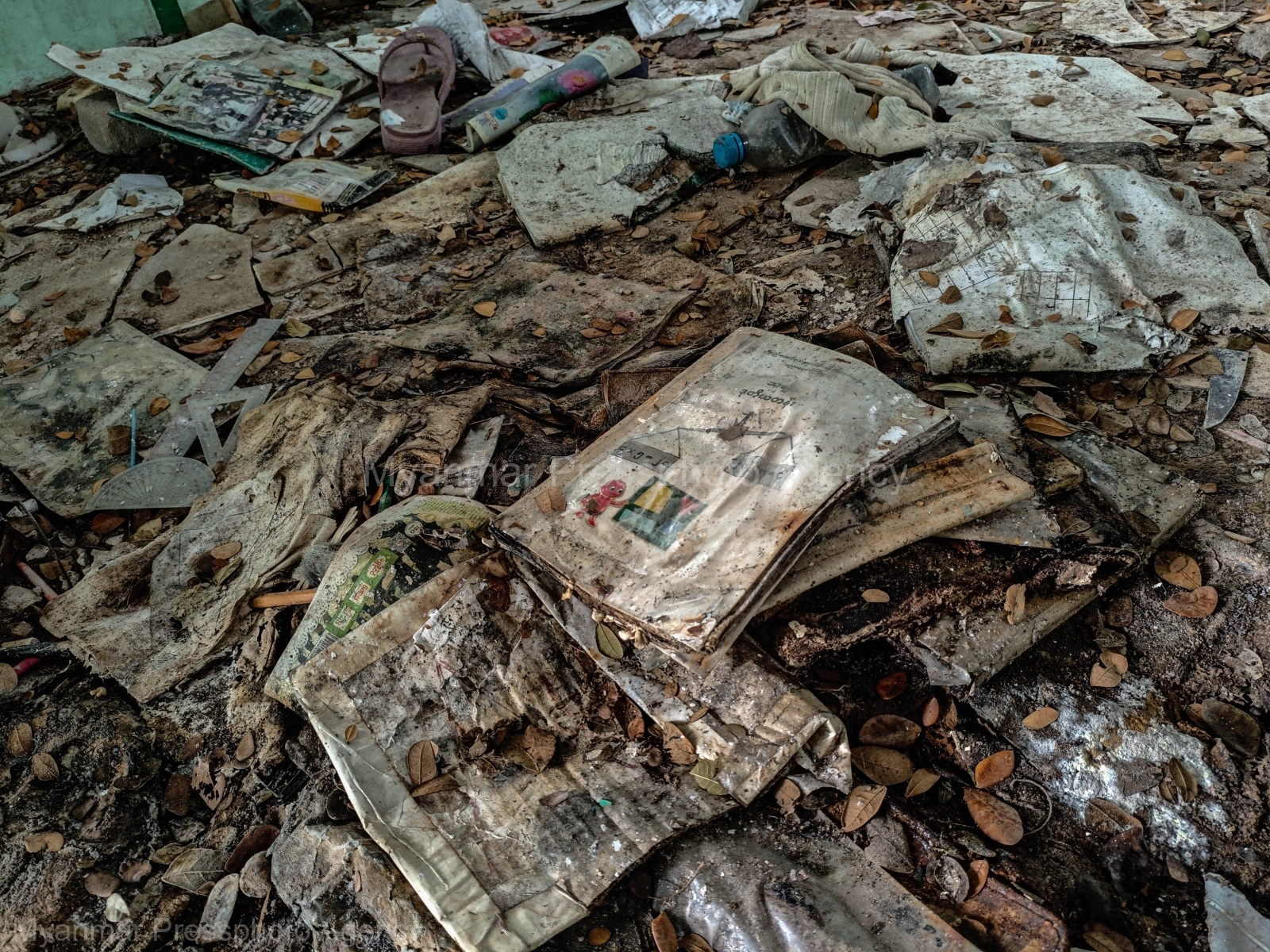
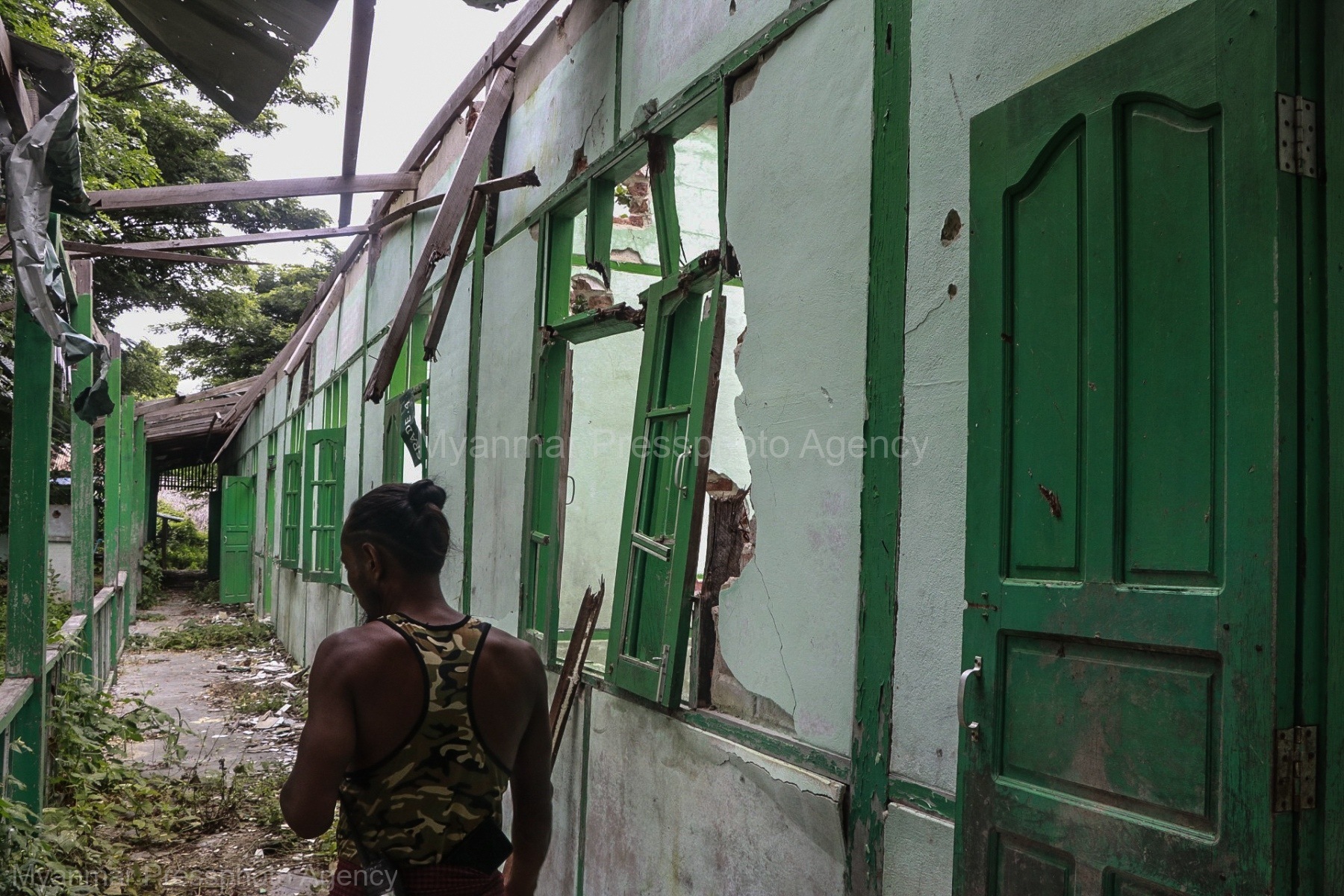
Today, the school compound is choked with thick bushes, obscuring the buildings from the outside. Inside, it remains exactly as it was on the day the bombs fell: school bags piled up, small shoes scattered in pairs and singles. The roofs are caved in, and the floors are littered with broken bricks, shattered glass, and shredded textbooks. It is a chilling sight, left untouched because there is no one willing—or brave enough—to clear it.
Many residents fled into the surrounding forests after the attack and have never returned. “There are many children we still can’t reach. They are living deep in the jungle,” U Mote Seik adds.
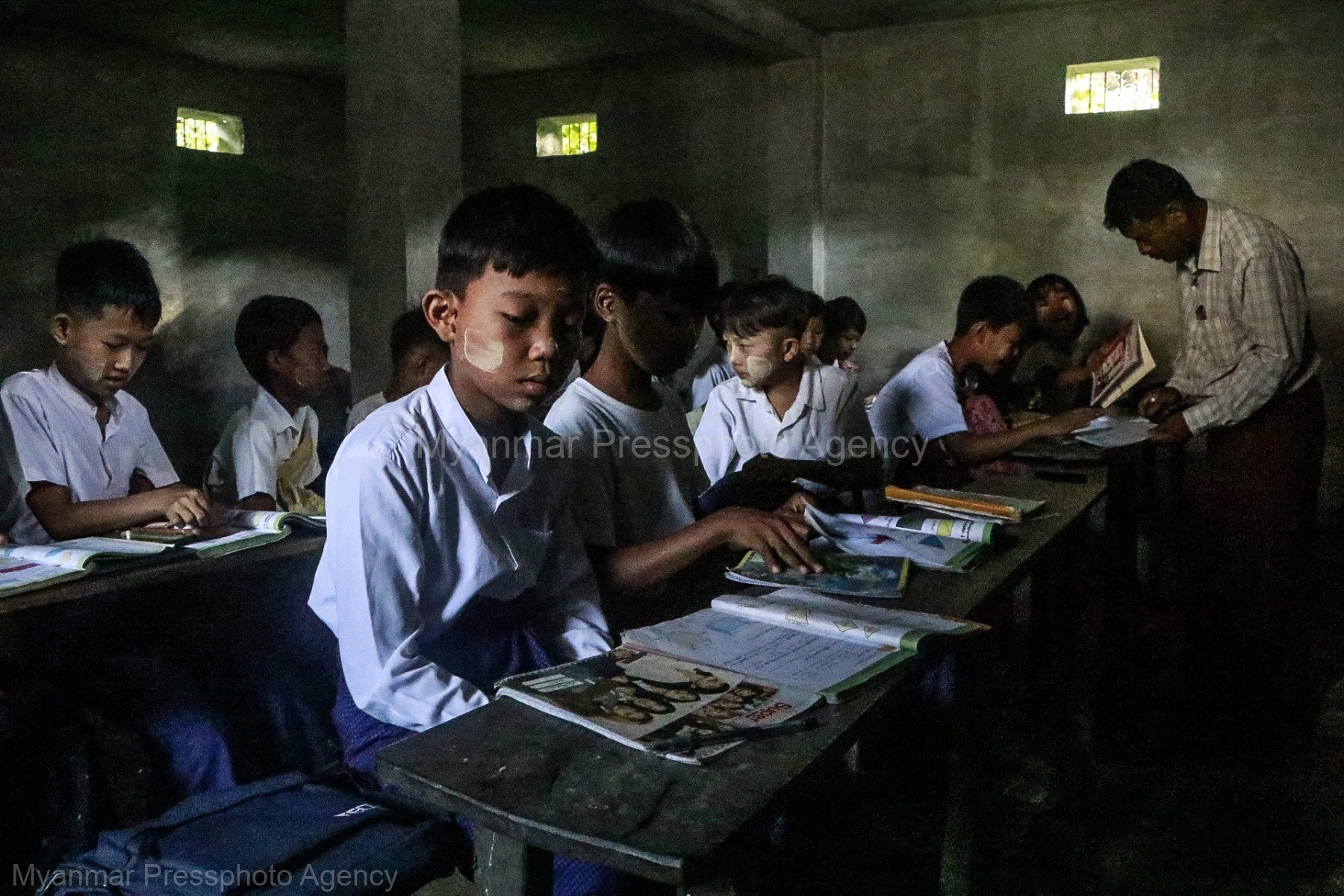
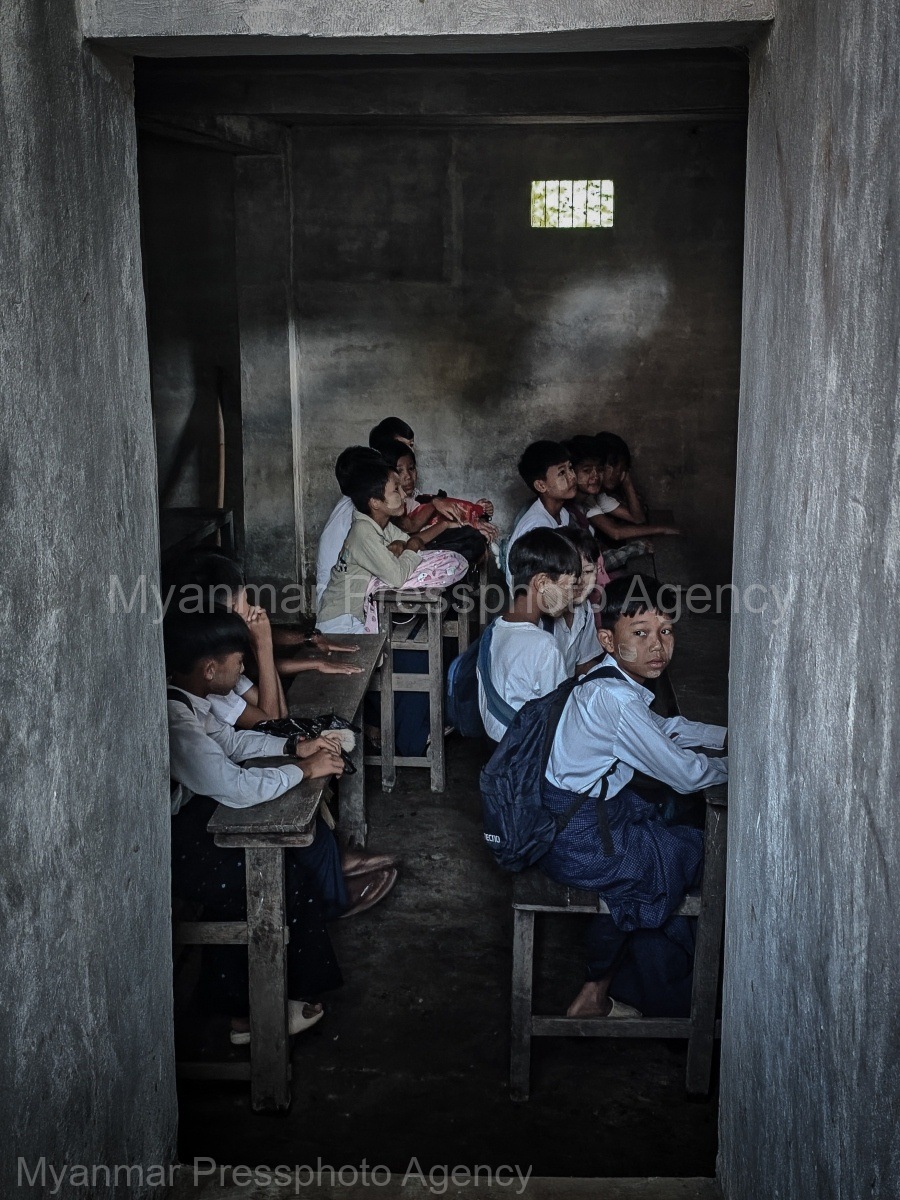
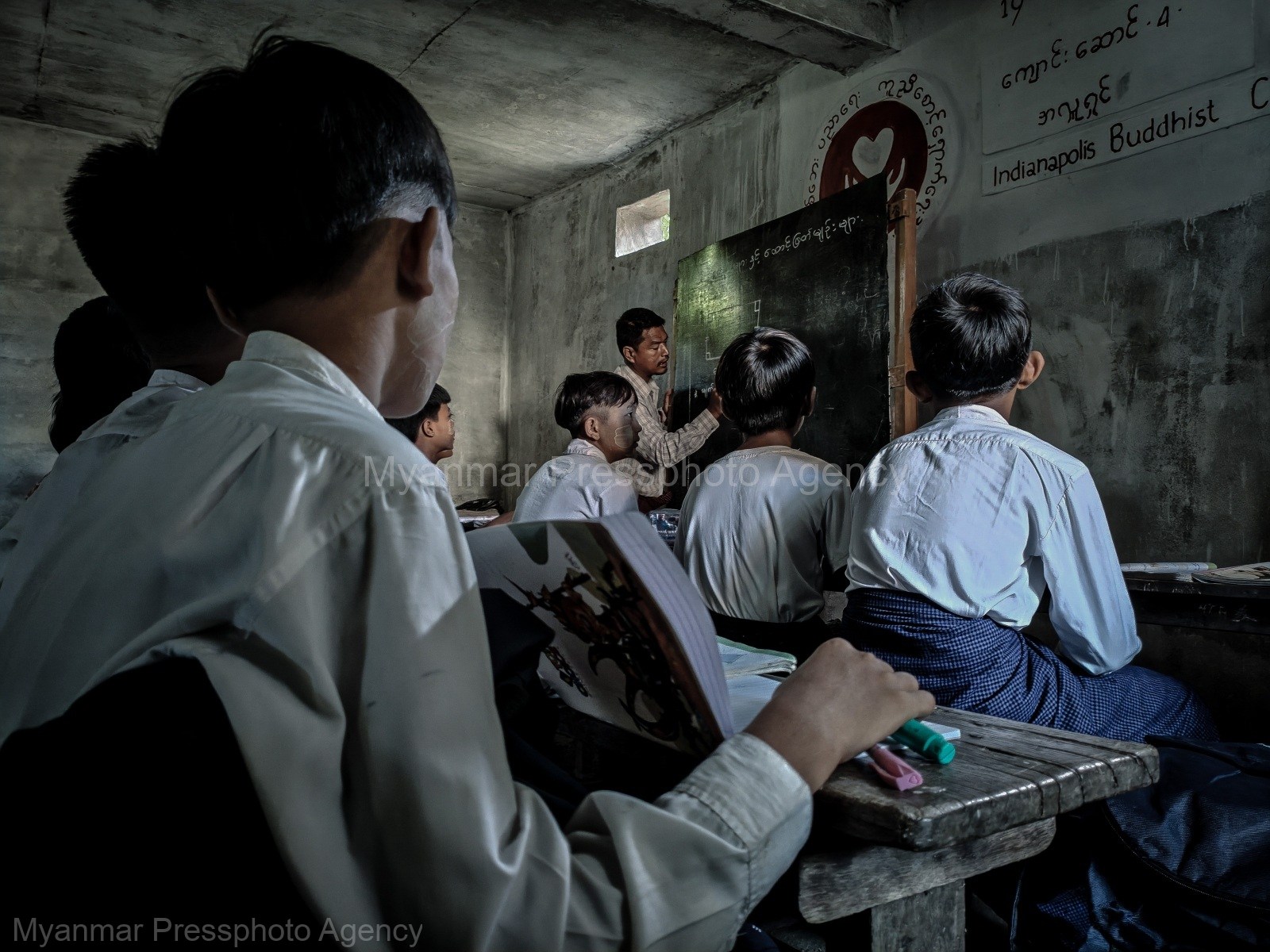
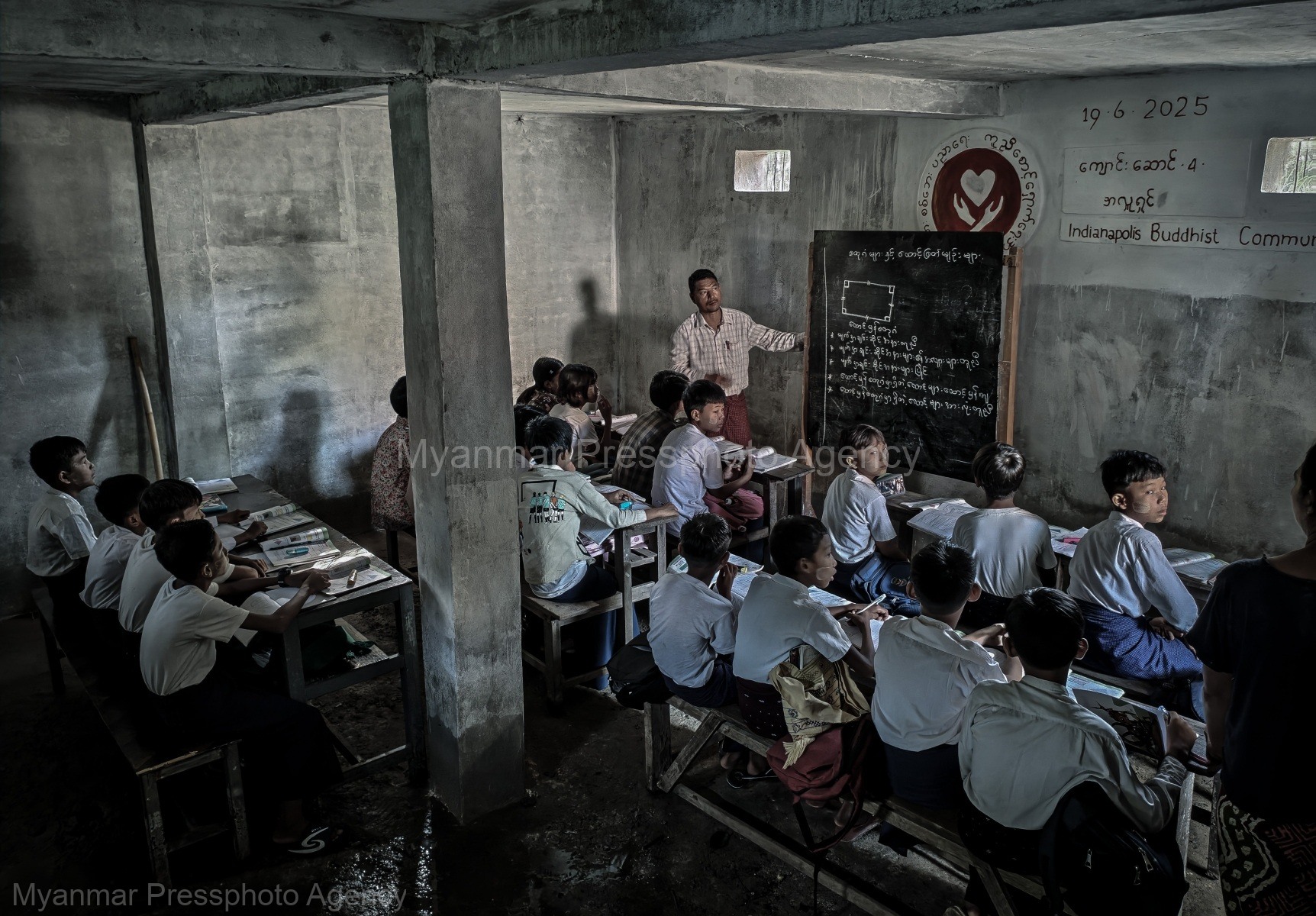
“A Smuggling Operation”
Following the massacre, the military predictably denied responsibility. The international community, just as predictably, issued statements of strong condemnation, demonstrating their diplomatic credentials before settling back into inaction.
Out of this deadly apathy, a term rarely heard in the modern world has become a physical reality in Myanmar: the underground school.
Because the military is systematically targeting not just civilians, but the country’s educational future, going to school has been driven beneath the earth, operating almost like an illicit smuggling ring.
“The whole world can see it. The massive scam syndicates in Myawaddy and Shwe Kokko stand tall and blatant in huge buildings,” says a Monywa-based political activist. “But our children have to go underground to hide from military fighter jets just to study.”
For parents in the Anyar (central) region, the daily school run used to be a source of agonizing anxiety. Sending a child to a conventional school meant accepting they could be killed at any moment.
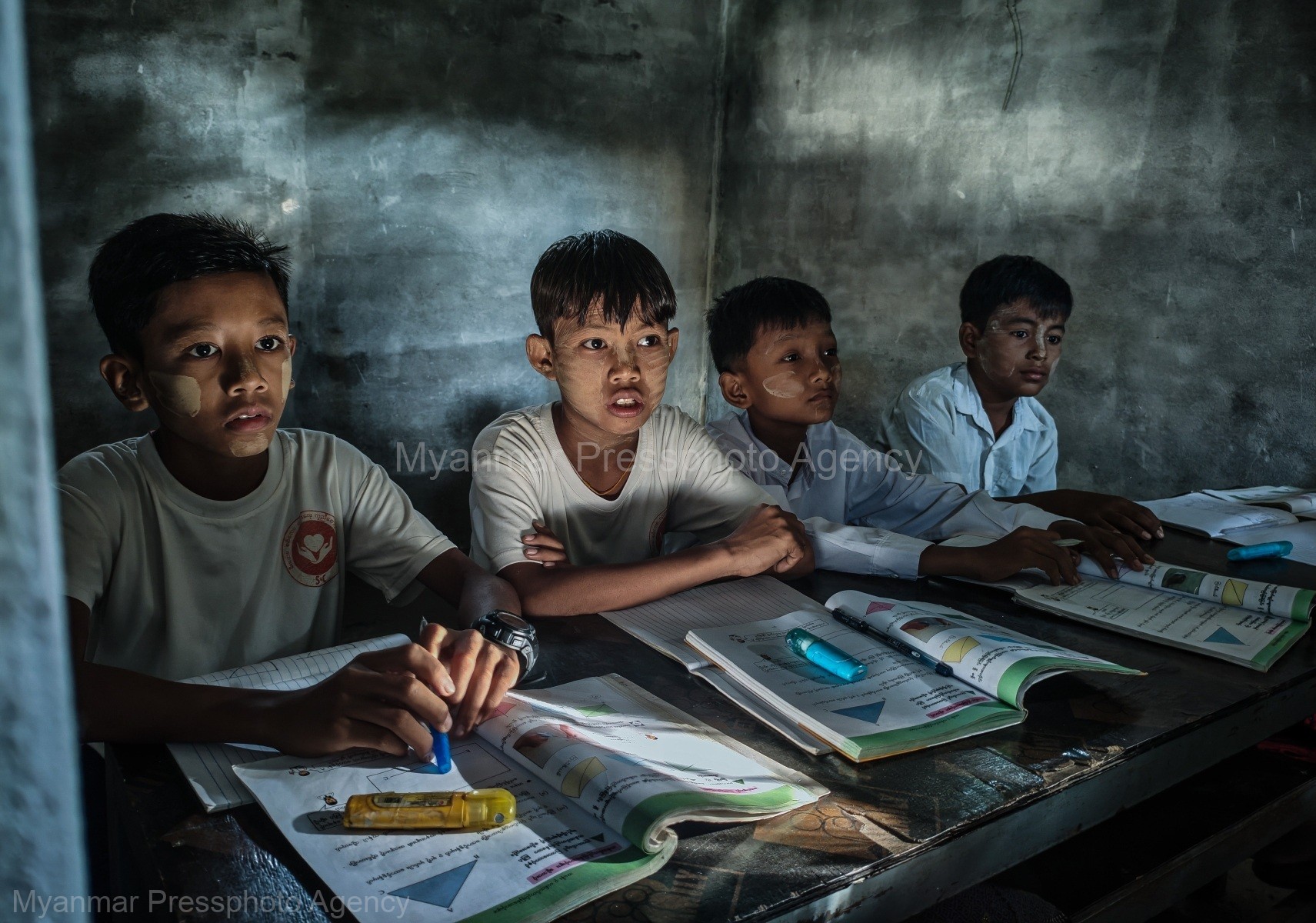
“When the radio warns of an incoming jet and things get chaotic, the worry is immense. We used to worry constantly when they were hiding in the forest,” says the mother of a Grade 3 student in Sagaing Region. “But now, because she can study in the underground school, I don’t have to worry at all. It provides 100% security.”
Twenty Steps Down
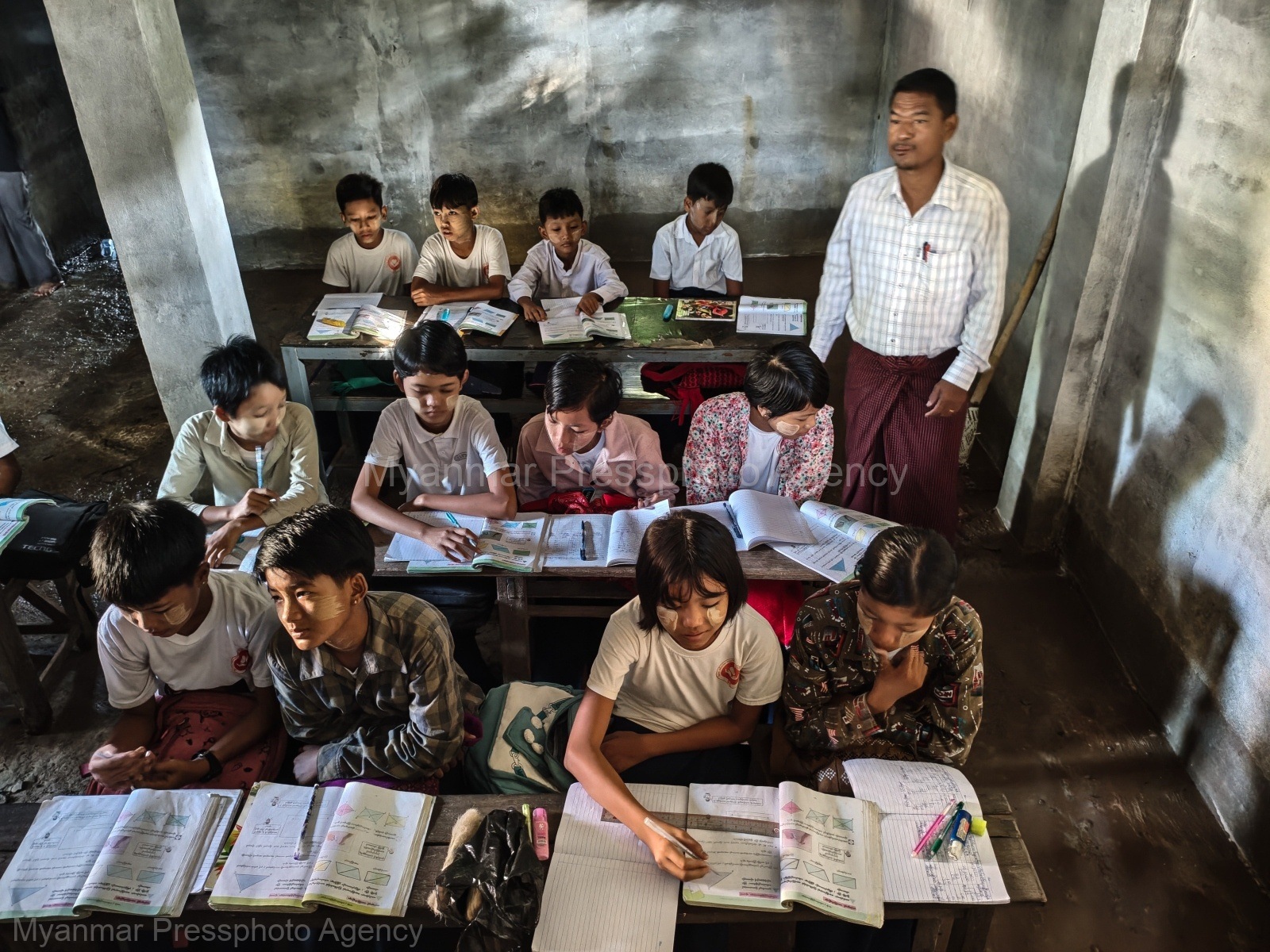
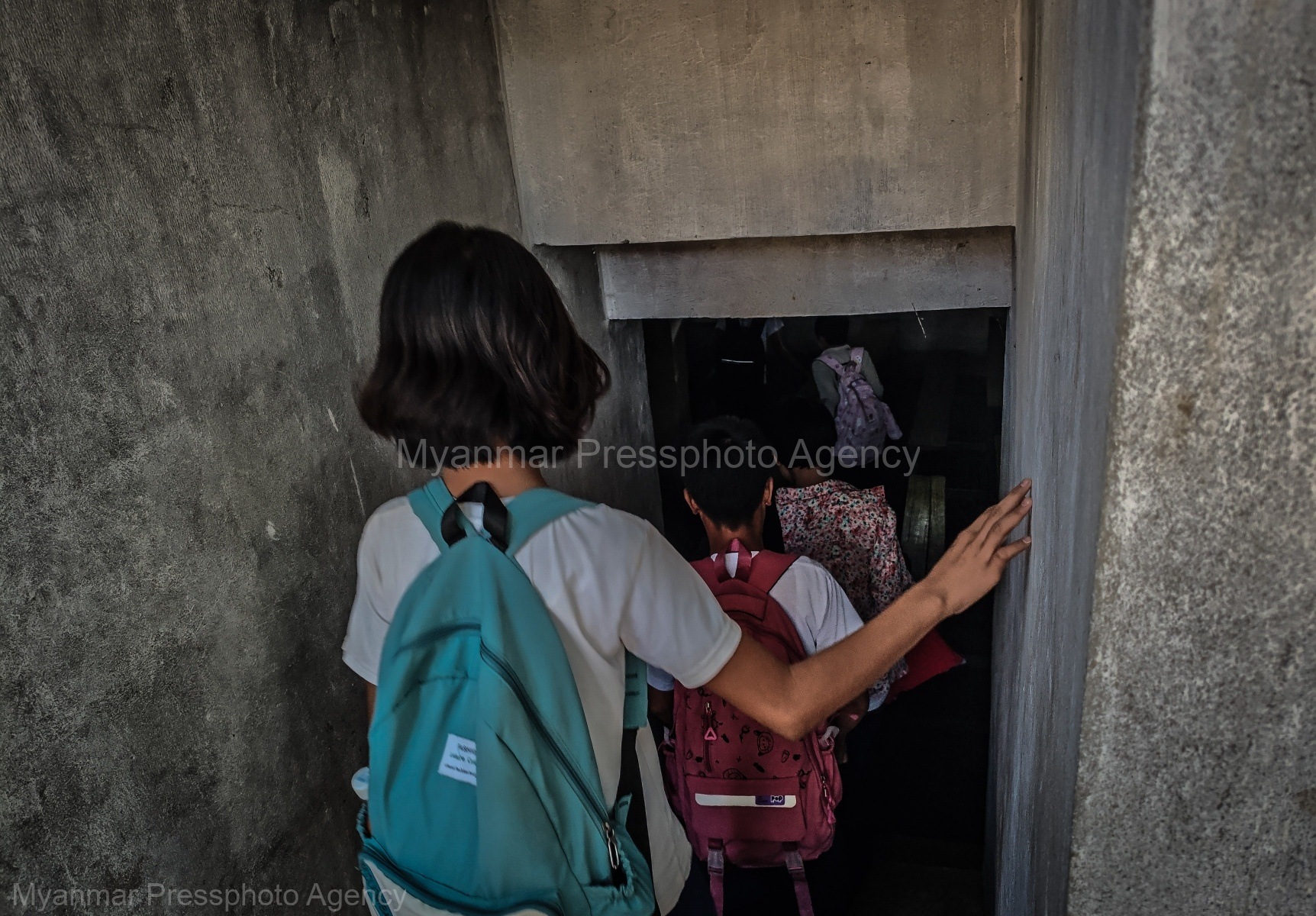
To ensure children can learn without fear, the S&C (Fire and War Education Assistance Group) has been constructing underground schools. They have recently completed their fourth subterranean facility across four townships in the Anyar region.
Unlike normal schools, these bunkers offer parents and students the ultimate peace of mind: immunity from the bombs falling above.
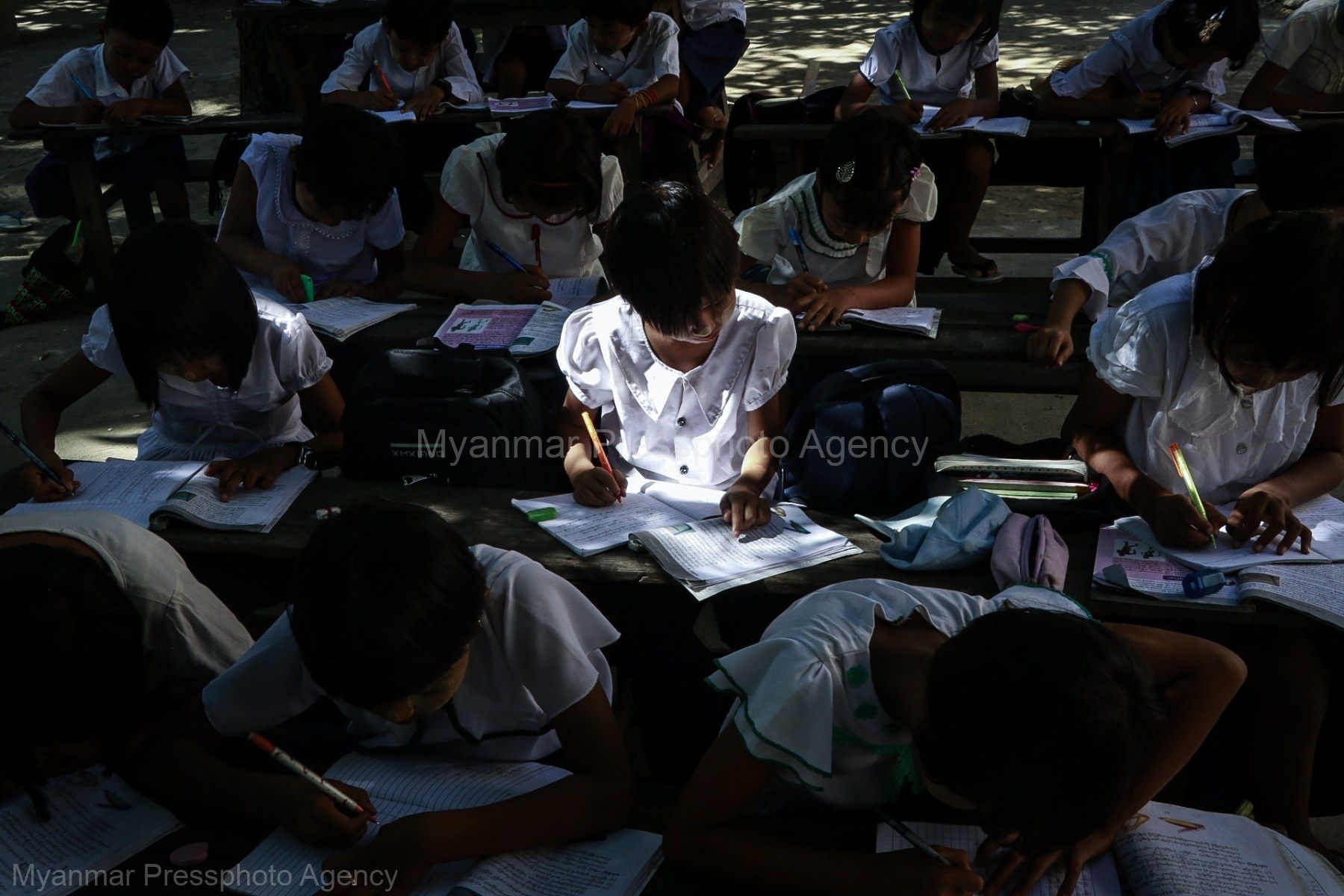
Reaching the classroom requires descending about 20 steps. The underground schools are equipped with ventilation systems, and the natural subterranean chill keeps the air comfortable. Students are spared the stifling heat of the surface, learning in two adjoining rooms that can accommodate over 40 children each.
However, funding constraints mean there are not enough of these bunkers to go around, forcing students to learn in shifts.
“We can’t teach everyone at once like in the big surface schools,” explains Ko Soe Moe Aung, the leader of S&C. “We can’t fit a large number of students. If we could build more, we would.”
The military coup has sent Myanmar’s economy into a tailspin, with inflation soaring daily. When the first underground school was built in June 2025, it cost around 18 million Kyat (MMK). By January 2026, sky-rocketing material prices and exorbitant transportation costs in the conflict-ridden Anyar region pushed the price tag past 40 million Kyat.
Ko Soe Moe Aung stresses the urgent need for more underground schools. Across the region, countless schools have shuttered entirely due to artillery and aerial bombardment. When schools relocate due to security threats, many children are left behind, their education permanently halted.
Trenches and Air Raid Drills
The constant threat has decimated the education sector. According to a local teacher, whenever a school is forced to close temporarily, dropout rates spike. Older students often head to the cities for manual labor or leave the country entirely. The chronic anxiety of waiting for the next bomb, coupled with parental fear, is driving a massive exodus from the classroom.
Yet, building enough underground schools is a financial impossibility. Most students must still rely on highly vulnerable surface schools.
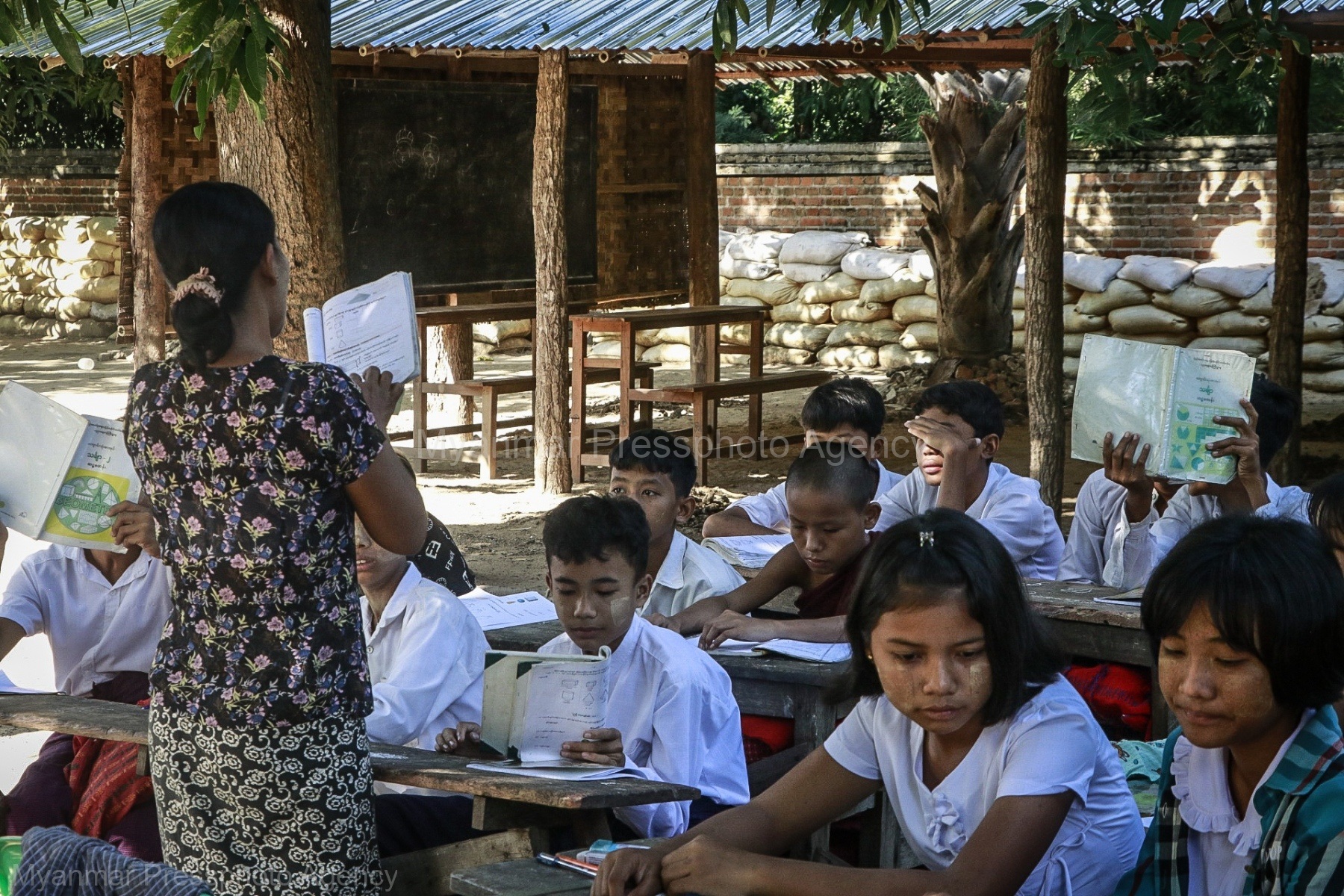
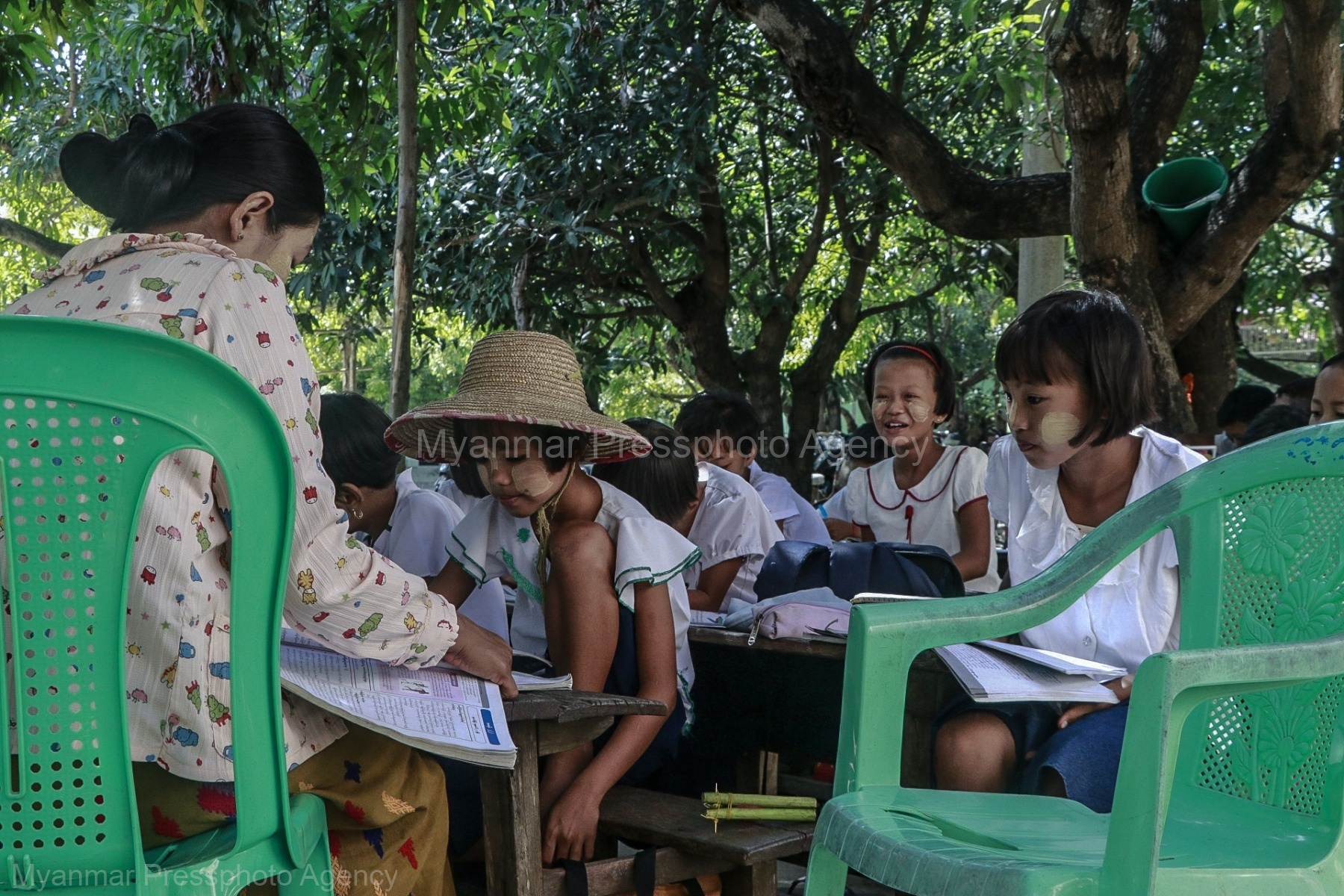
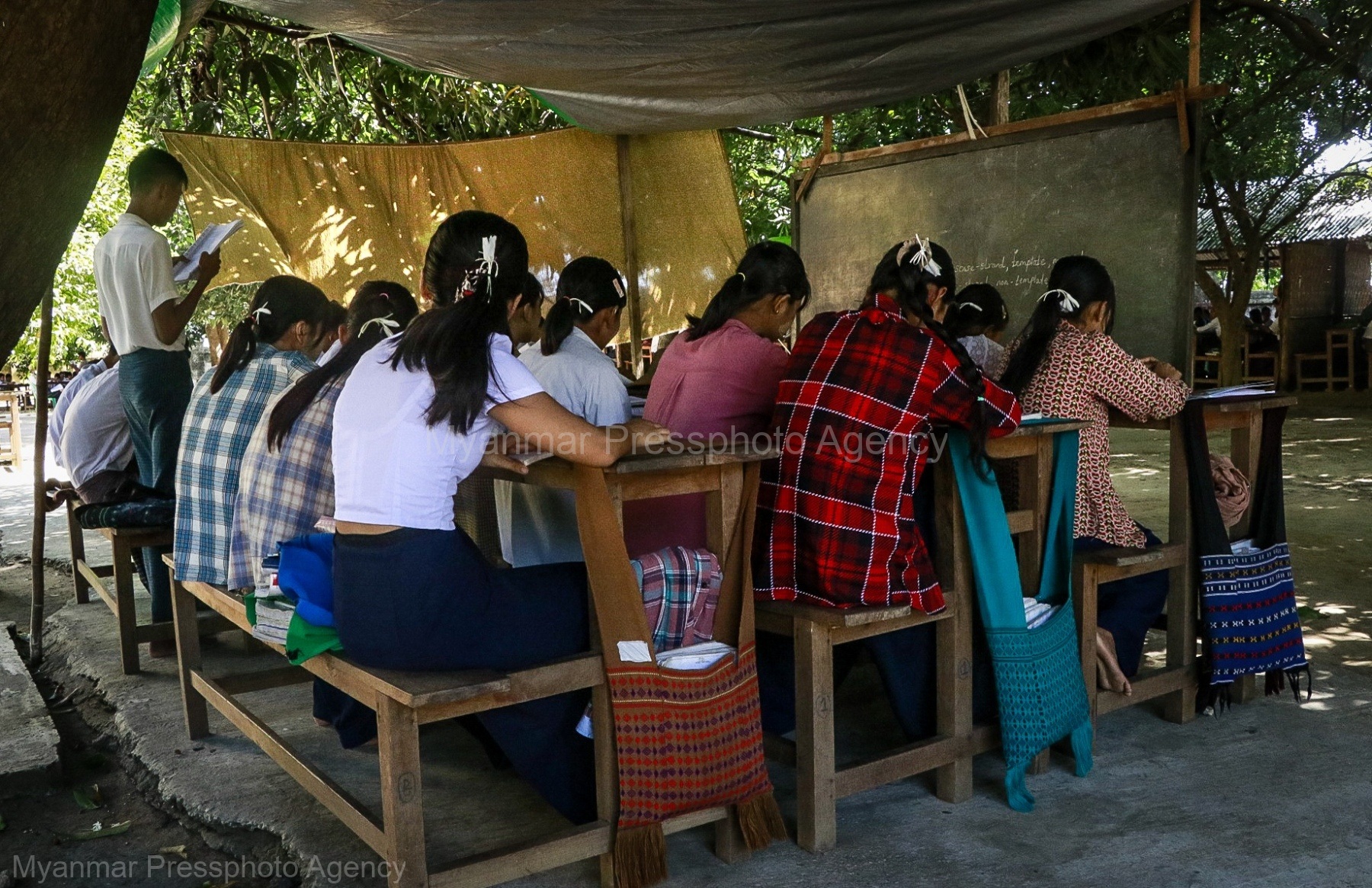
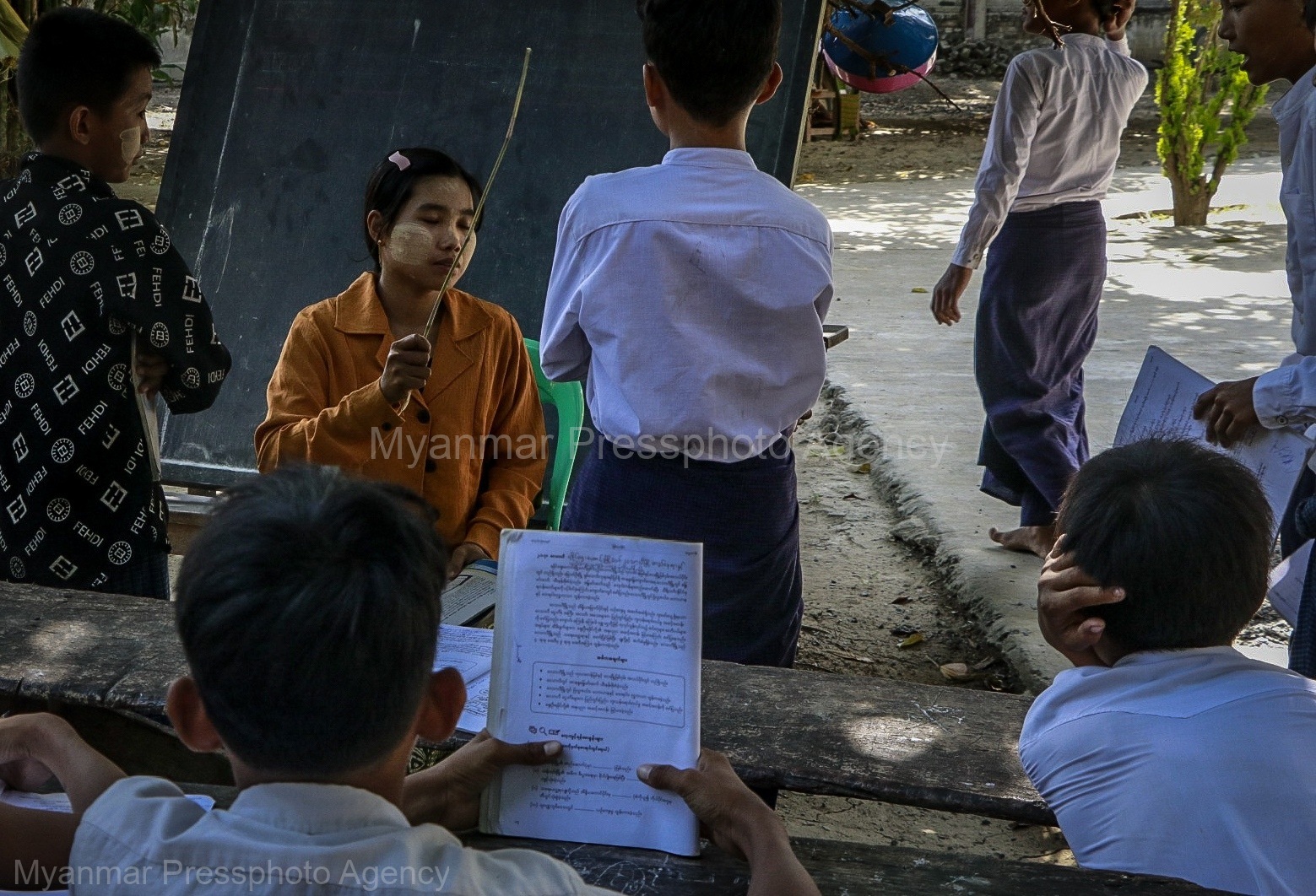
Survival in these traditional classrooms requires grim preparations: digging bomb shelters in the schoolyard, monitoring military aviation channels via Icom radios, and conducting regular air raid drills.
“Every student and teacher must practice reaching the bomb shelter in time,” the local teacher explains. “If we can’t make it to the shelter when an airstrike happens, they are taught exactly how to drop and take cover nearest to where they are.”
Going to school in Anyar is akin to marching to the frontline. Local revolutionary forces try to provide air-defense training, but a local resident argues it is not enough. “Schools need to practice these drills with the students at least once a week,” he suggests.
The activist from Monywa agrees, noting that because the military targets civilians nationwide daily, these drills shouldn’t just be for schools, but for all civilians living in resistance-held territories.
The data underscores this grim reality. According to a survey by the Nyan Lynn Thit analytical group, military airstrikes targeting civilians in 2025 were more than double those targeting revolutionary forces. The National Unity Government (NUG) reported 5,608 military airstrikes nationwide in 2025, resulting in 2,181 civilian deaths and the destruction of 334 religious buildings, 215 schools, and 68 hospitals.
The new year has brought no reprieve. On January 17, 2026, a military airstrike on a preschool in Kan Yin village, Ayadaw Township, Sagaing Region, killed a young child and a villager—a brutal message from the junta that schools will remain in their crosshairs.
If children are to learn safely, more underground schools must be built. But funding remains the primary obstacle. Every bunker built by S&C has been funded entirely by donations from Myanmar citizens at home and abroad.
While the international community offers thoughts, prayers, and condemnations every time Myanmar’s children are slaughtered in their classrooms, not a single cent has been provided for the underground schools keeping them alive.
“We are truly grateful to S&C. Because of what they’ve built, our children can study safely,” says the mother of the Grade 3 student.
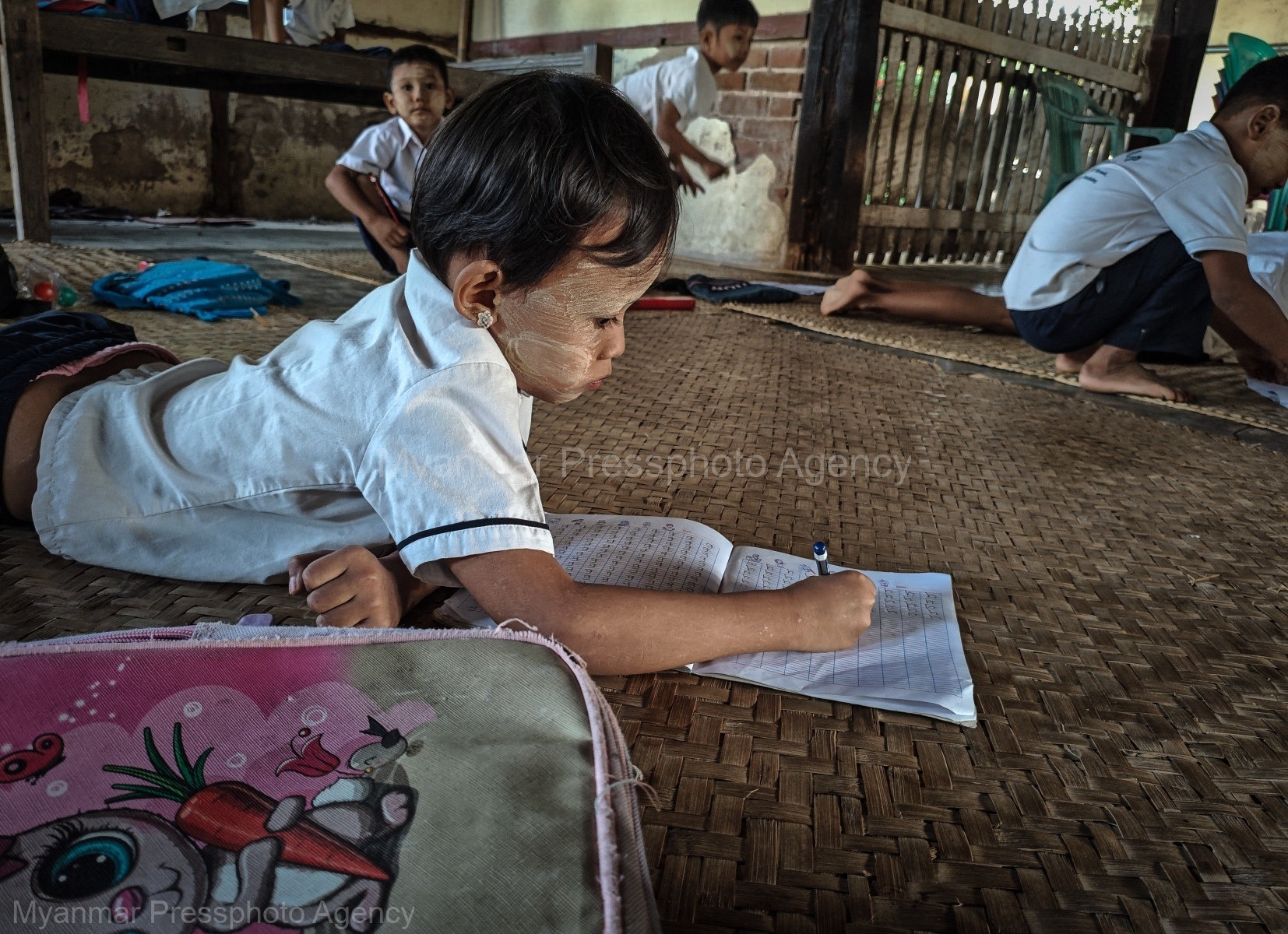
In Myanmar today, children are staking their lives simply to read and write.