
By MPA
NAYPYIDAW, Myanmar — In a move heavily condemned by independent medical experts as a delusional attempt to mask a structural humanitarian catastrophe, Myanmar’s military junta leader, Senior General Min Aung Hlaing, has vowed to elevate the country’s midwifery and nursing sectors to regional “ASEAN standards” despite the near-total collapse of the national healthcare system.
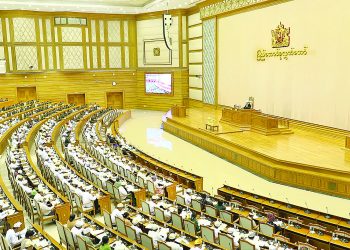
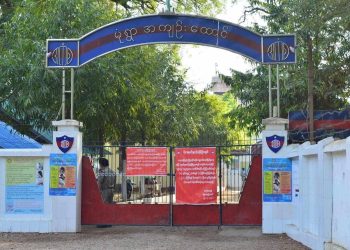
The controversial declarations were delivered on Thursday, 16 July 2026, during a highly orchestrated multi-location opening ceremony hosted in the capital, Naypyidaw. The event marked the simultaneous state-backed inauguration of the central University of Nursing alongside 15 localized nursing institutes distributed across 14 states and regions.
Addressing the military assembly, Senior General Min Aung Hlaing explicitly claimed that his administration is committed to generating adequate health human resources to ensure universal healthcare access for the sovereign populace. He designated the newly opened facilities as state-of-the-art hubs tasked with systematically incubating highly skilled, compassionate nursing and midwifery professionals capable of competing on the Southeast Asian stage.
However, internal health sector intelligence and frontline ground realities tell a starkly different story. The country’s healthcare infrastructure has been thoroughly hollowed out since the military initiated its illegal February 2021 coup.
Following the power grab, thousands of senior specialists, general practitioners, and veteran midwives systematically abandoned their state posts to lead the Civil Disobedience Movement (CDM), refusing to operate under a military dictatorship.
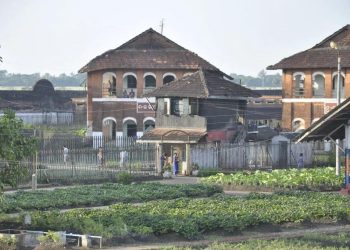
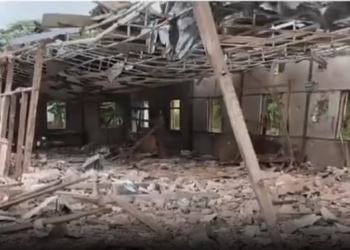
In response, the military council launched an aggressive campaign of violent crackdowns, arbitrarily arresting, detaining, and sentencing medical personnel. This systemic persecution forced a massive exodus of qualified professionals, leaving the vast majority of township hospitals and rural healthcare clinics completely abandoned and shuttered due to a total lack of medical staff.
Ignoring this structural destruction, the junta chief utilized the stage-managed ceremony to project an aura of administrative normalcy, issuing top-down directives to strictly train incoming batches of midwives according to standardized national parameters.
While the regime orchestrates high-profile building launches, everyday civilians face unprecedented barriers to basic survival. Public facilities face chronic, life-threatening shortages of essential medicines, while unregulated private market rates for basic pharmaceuticals have skyrocketed completely out of reach.
Independent regional analysts evaluate Min Aung Hlaing’s “ASEAN-standard” healthcare rhetoric as an empty political fantasy that is completely detached from the grim ground reality. As the state apparatus fails to secure basic clinical stability, local civil society groups warn that utilizing hollow institutional propaganda while millions of trapped citizens remain cut off from basic maternal care represents a cynical mockery of a population struggling through a protracted health crisis.