
13 June 2026 By Ko Myo
YANGON, Myanmar — Anti-regime resistance networks in Myanmar have launched a coordinated appeal calling on the public to participate in a silent, decentralized “Nationwide Rose Movement” to mark the 81st birthday of ousted democratic leader Daw Aung San Suu Kyi, despite fears of immediate retaliation from security forces.
The formal mobilization directive was published on Saturday, 13 June, by the General Strike Coordination Body (GSCB), a major umbrella alliance of grassroots strike committees.
The GSCB has instructed citizens to weaponize symbolism on 19 June by offering roses—or alternative local flowers—at Buddhist altars, wearing them in their hair, or distributing them among neighbors, depending heavily on localized security conditions.
The operational design also includes a parallel digital strike, urging internet users to flood social media networks with photographs of flowers, alongside physical flash-mobs where activists will carry roses into urban marketplaces.
The strike alliance stated that the mass flower campaign aims to serve as a visual testament that the civilian population remains an unyielding “Steel Rose”—refusing to capitulate to institutional violence.
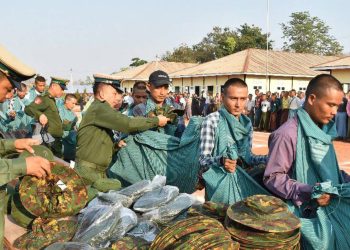
“We are urging the populace to demonstrate our collective, unshakeable alignment with Daw Aung San Suu Kyi,” the GSCB declaration read. “The Rose Movement represents a clear vehicle for the public to declare that we completely reject the military council’s brutal suppression, its predatory forced conscription dragnet, and its ongoing attempts to manufacture a false transition through staged political maneuvers.”
However, executing even micro-expressions of dissent inside urban centers has become exceptionally dangerous.
Following previous flower strikes, junta authorities heavily monitored florist networks, arrested individuals carrying red roses, and routinely sentenced internet users to lengthy prison terms simply for changing their social media profile pictures to symbolic artwork.
The tactical risks have created a climate of deep anxiety among elderly pro-democracy sympathizers inside major cities like Yangon and Mandalay, where ward administrators conduct regular late-night raids.
“I desperately want to participate; Daw Aung San Suu Kyi is a once-in-a-generation stateswoman who sacrificed everything for this country,” a 50-year-old literary professional based in Yangon told MPA under anonymity.
“But inside military-controlled Yangon, even joining the digital campaign on Facebook carries extreme risks. The cyber-intelligence teams are constantly scanning profiles, and if they trace a photo back to you, it means immediate detention. People are torn between their deep loyalty to ‘Mother Suu’ and the stark necessity of daily survival.”
Daw Aung San Suu Kyi, a Nobel Peace Prize laureate, has been cut off from all global communication and held in strict military custody since she was arbitrarily detained during the February 2021 military coup.
As her 81st birthday approaches, independent political analysts suggest that the junta will likely deploy heavy paramilitary patrols and enforce strict monitoring around commercial flower markets, transforming simple botany into a critical front line of psychological warfare between an armed regime and a resilient civilian populace.