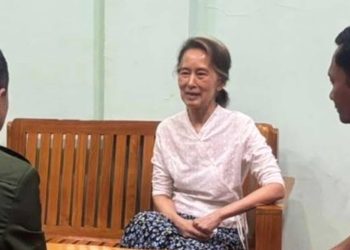

MANILA, Philippines — The President of the Philippines and current ASEAN Chair, Ferdinand Marcos Jr., has called on Myanmar’s military authorities to not only release deposed leader Aung San Suu Kyi but also to restore her ability to function as a political leader.
Speaking at a press conference following the ASEAN Summit on Friday, President Marcos emphasized that the treatment of Ms. Suu Kyi remains a central factor in the bloc’s diplomatic engagement with the sham government in Naypyidaw.
The Philippine President confirmed that despite repeated requests, ASEAN envoys have made “no progress” in securing a meeting with the Nobel Peace Prize laureate, who has been in detention since the 2021 coup.
“How we handle the situation regarding Daw Aung San Suu Kyi is critical,” Marcos told reporters. “It is not just about her release; she must be allowed to function as a leader if we are to find a path forward for the country.”
His comments signal a significant shift in ASEAN’s rhetoric, moving beyond simple humanitarian appeals for her freedom toward an explicit demand for her political reinstatement.
The President also expressed frustration over the lack of “significant change” regarding the implementation of ASEAN’s Five-Point Consensus—a peace plan agreed upon shortly after the coup that the military has largely ignored.
Under the current leadership of the Philippines, ASEAN appears to be taking a firmer stance. President Marcos warned that the military’s actions concerning Ms. Suu Kyi would directly influence future decisions made by the regional bloc.
Myanmar remains barred from high-level ASEAN summits due to the military’s failure to end violence and engage in inclusive dialogue. While some member states have pushed for more engagement with the junta, the Philippines and other maritime ASEAN nations have maintained that the restoration of democratic norms—and the inclusion of elected leaders—is non-negotiable.
As the crisis in Myanmar enters its fifth year, the international community continues to watch ASEAN’s performance closely. President Marcos’s latest remarks underscore the reality that without the participation of the nation’s most popular political figure, any proposed solution to the civil war is likely to lack both domestic legitimacy and international support.