
30 April 2026 By Kan Htun
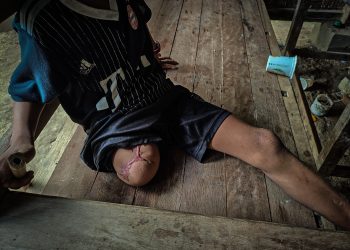
MAUNGDAW, Myanmar — An 11-year-old Rohingya boy has lost his left leg after stepping on a landmine near a security battalion in Maungdaw Township, adding to the growing toll of civilian casualties caused by unexploded ordnance in Rakhine State.
The victim, identified as Marmat Hudin from Lay Mile village, was reportedly heading toward a local monastery to pick mangoes with friends on the morning of 27 April when the blast occurred. The area is situated close to the Border Guard Police Battalion No. 2 (Na Kha Kha 2), a zone heavily fortified with defensive weaponry.
Witnesses and family members confirmed that the explosion was so intense that Marmat Hudin’s left leg was severed below the knee. His other leg also sustained shrapnel wounds. “The family is devastated and impoverished; they are struggling to afford the emergency medical care he desperately needs,” a local resident told MPA.
Local sources suggest the mine may have been planted as part of the defensive perimeter surrounding the nearby security base, though neither the military junta nor local armed groups have claimed responsibility for the device.
The incident is not isolated. In February, a 10-year-old in a nearby Rohingya village was injured by a grenade blast. Rakhine State now records some of the highest rates of landmine-related injuries in the country.
According to data from UNICEF, the first half of 2025 saw 357 casualties from mines nationwide, with Rakhine State accounting for 24% of those cases—the second highest in Myanmar.
For the children of Maungdaw, daily tasks like gathering food or playing near their villages have become high-risk activities. With formal demining efforts stalled due to the ongoing civil war between the military junta and the Arakan Army (AA), large swathes of the countryside remain littered with “hidden killers.”
Rights groups have repeatedly called for both sides of the conflict to cease the use of landmines and to allow humanitarian access for victim assistance and mine clearance. For Marmat Hudin, the journey to recovery will be a long and expensive one, in a region where the medical infrastructure has already been brought to its knees by years of conflict and isolation.