
28 April 2026 By Ko Myo
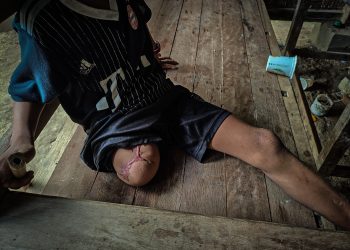
YANGON, Myanmar — At least 71 children under the age of 18 have been killed by Myanmar military forces in the first four months of 2026, according to a report released on Tuesday by the Assistance Association for Political Prisoners (AAPP).
The victims, who include an infant as young as two months old, were identified by name in the advocacy group’s latest update. The toll includes 33 girls and 38 boys, highlighting the indiscriminate nature of the violence that has gripped the country since the 2021 military coup.
Bago Region recorded the highest number of child fatalities, with 23 deaths. According to AAPP data, aerial bombardment remains the primary cause of death, with 45 of the 71 minors killed during junta airstrikes on residential areas.
“Despite the military’s attempts to present itself as a civilian administration following their sham elections, their inherent violent nature remains unchanged,” a CDM officer based near the border told MPA. “By continuing these killings, they are signaling to the world that they have no regard for international condemnation.”
The report highlighted a recent incident on 25 April in Yesagyo Township, Magway Region. A combined force of soldiers, police, and pro-junta militia (Pyu Saw Htee) launched a drone attack on Nga Ta Yaw village.
The strike claimed the life of a young novice monk, Shin Withuta, as well as two students: Maung Kyaw Ko Ko (also known as Myat Thu Ya Kyaw), a Grade 10 student, and Maung Hein Nyi Nyi Htet, who was only in Grade 2.
Human rights monitors have repeatedly warned that the military’s use of high-grade explosives and aerial weaponry in civilian heartlands constitutes a potential war crime. However, the junta has consistently denied targeting non-combatants, often blaming resistance groups for civilian casualties.
As of late April, the total number of civilians killed by the military since the 2021 takeover has continued to climb into the thousands. For the families of the 71 children lost this year, the search for accountability remains a distant hope in a landscape dominated by escalating aerial warfare and systemic impunity.