
24 April 2026 By Ko Myo
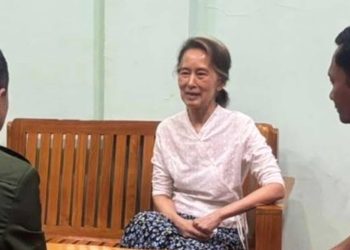
MANILA, Philippines — The Philippines, currently holding the ASEAN Chairmanship, has issued an urgent appeal for the release of State Counsellor Aung San Suu Kyi and all remaining political prisoners, describing the move as essential for any meaningful national reconciliation in Myanmar.
In a statement released on Friday, marking the fifth anniversary of the regional bloc’s “Five-Point Consensus,” Manila welcomed the recent release of President Win Myint during the traditional New Year amnesty. The Chair characterised the President’s return as a “positive step” that could potentially pave the way for an inclusive national-level dialogue.
Despite the small concessions made by the military junta, the fundamental demands of the ASEAN peace plan remain unfulfilled. “While the military has ignored the Five-Point Consensus for years, ASEAN continues to hold onto it as the primary framework for peace,” a Yangon-based political analyst told MPA. “However, it remains highly doubtful that the regime is truly ready to release Aung San Suu Kyi.”
The ASEAN Chair reiterated that the Five-Point Consensus continues to be the valid reference for resolving the political crisis. The statement explicitly called for an immediate cessation of violence and urged all parties to stop attacks on civilians and public infrastructure.
Beyond the issue of high-profile detainees, the regional bloc urged all stakeholders to exercise maximum restraint and avoid actions that would further escalate the conflict. The Philippines also emphasised the need to create a “safe and conducive environment” for the delivery of humanitarian aid, which continues to be hampered by ongoing battles.
The regional peace plan was first signed on 24 April 2021, in the presence of Senior General Min Aung Hlaing. Although the General committed to the agreement at the time, his administration has faced persistent international criticism for failing to implement any of its core components, including the initiation of dialogue with the pro-democracy movement.
As Myanmar’s civil war enters a critical phase, the pressure on the junta from its regional neighbours has intensified. For the people of Myanmar, the release of President Win Myint offered a rare glimmer of hope, but the continued isolation of Aung San Suu Kyi remains the ultimate barrier to ending the deadlock.
The ASEAN statement serves as a reminder to the military leadership in Naypyidaw that without the participation of the nation’s elected leaders, any claim of moving toward a “democratic transition” will remain unrecognised on the world stage.