
23 April 2026 By Ko Myo
OTTAWA, Canada — The Canadian government has reaffirmed its recognition of the official titles of Myanmar’s ousted leaders, referring to Win Myint as “President” and Aung San Suu Kyi as “State Counsellor,” in a diplomatic move that signals continued pressure on the military junta.
In a statement released by Global Affairs Canada, the government welcomed the release of President Win Myint and over 4,500 other inmates during the traditional New Year amnesty on April 17. However, Ottawa was firm in its demand for the immediate and unconditional release of all remaining political prisoners, most notably the State Counsellor.
Beyond the releases, Canada called for an immediate cessation of violence across Myanmar and the establishment of “meaningful dialogue” aimed at achieving a peaceful outcome that reflects the will of the Myanmar people.
The decision to use the leaders’ formal titles contrasts with the rhetoric of the military junta, which refers to the elected leaders simply by their names or as “inmates.” Local activists have welcomed Canada’s stance, viewing it as a crucial refusal to normalize the 2021 coup.
While the international community celebrates President Win Myint’s return home, concerns remain high regarding his actual freedom. Reports from Naypyidaw suggest the President is living under heavy military surveillance, with visitors subjected to intense interrogation and security checks.
“While the world welcomes the President’s release, we must speak out so that the international community understands he is still living under house arrest-style conditions,” a Yangon-based political analyst told MPA.
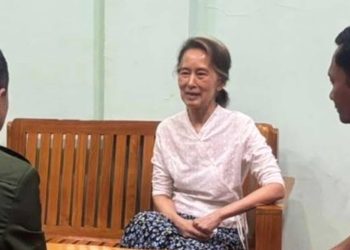
The whereabouts of State Counsellor Aung San Suu Kyi remain the most pressing concern for the public. The 80-year-old leader has been held in isolation for over five years, prompting the “All in One Piece Movement” to launch a global “Proof of Life” campaign. The movement is demanding verifiable evidence that the Nobel Laureate is alive and in good health.
The reality of the recent amnesty also continues to be scrutinized. Despite the junta’s claim of releasing 4,335 prisoners, the Political Prisoners Network Myanmar (PPNM) reported that they could only confirm 1,686 actual releases, of which only 292 were political detainees.
As Canada joins a chorus of Western nations—including the US, UK, and Australia—in demanding a return to democratic norms, the focus remains on whether the junta’s limited concessions will be enough to appease a world increasingly concerned with the human rights situation in Myanmar.