
22 April 2026 By Hsu Yee
PAKOKKU, Myanmar — Former members of the People’s Defence Force (PDF) who surrendered to the Myanmar military are being imprisoned and subjected to severe mistreatment, despite junta promises of amnesty and safe integration, according to local resistance sources and a former inmate.
Reports from the Southern YSO PDF allege that several fighters from Pakokku, Kamma, and Myaing townships—who had surrendered to the junta—are currently being held in Pakokku Prison alongside other political detainees. The group claims these individuals were initially lured with promises of safety but were later incarcerated after providing critical intelligence to military investigators.
“For the first two or three months, the junta held welcoming ceremonies for them in cities like Taunggyi and Mandalay,” Ko Aung Maung of the Southern YSO PDF told MPA. “Those from the cities were allowed to stay at home initially, while those from rural areas were kept at the Military Affairs Security (Sa-A-Fa) offices. The military extracted maps and intelligence on resistance positions from them, and once they were no longer useful, they were sent to prison.”
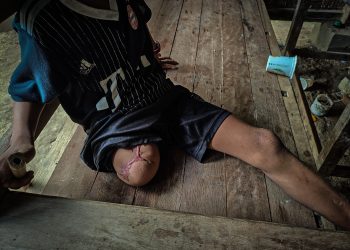
The accounts from Pakokku Prison suggest a grim environment. A recently released inmate reported that many of the defectors have faced torture, and some have been forced to act as human mine-clearers. “Many are beaten or killed. Some are taken on military columns to clear mines, where they often die in explosions,” Ko Aung Maung added.
The resistance group noted that while some surrendered due to military psychological warfare, a significant number of those who defected had been struggling with drug addiction prior to their surrender. The exact number of former PDF members currently in Pakokku Prison remains unconfirmed, but the facility is reportedly overcrowded, housing approximately 700 inmates.
The reports from the prison highlight the indiscriminate nature of the junta’s legal system. Among the 700 detainees are individuals ranging from 17 to over 70 years old, with sentences spanning 10 to 50 years. There are also reports of pregnant women facing decades of imprisonment on politically motivated charges, as well as entire families and striking civil servants (CDM workers) arrested during routine ID checks while travelling.
The military junta has frequently used high-profile defection ceremonies as propaganda to signal a weakening of the resistance. However, the reports of subsequent imprisonment and forced labour suggest a darker reality for those who choose to lay down their arms. For the resistance movement, these incidents serve as a stark warning: in Myanmar’s current civil war, a surrender may lead not to freedom, but to the very dungeons the fighters once sought to dismantle.