
18 April 2026 By Moe Nya
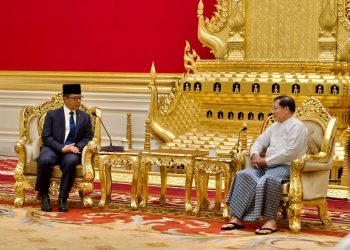
NAYPYIDAW, Myanmar — Following the recent release of democratically elected President Win Myint, political analysts warn that Myanmar’s military junta is deploying a sophisticated “hostage diplomacy” strategy aimed at undermining the resistance and regaining international legitimacy.
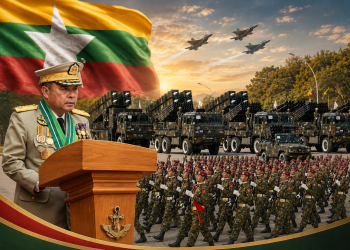
The move, seen by many as a tactical play rather than a sign of genuine reform, appears designed to project a facade of compliance with ASEAN’s Five-Point Consensus. By easing restrictions on top civilian leaders, the junta, led by Senior General Min Aung Hlaing, hopes to secure its seat at the United Nations and buy another five-year term of military-controlled governance.
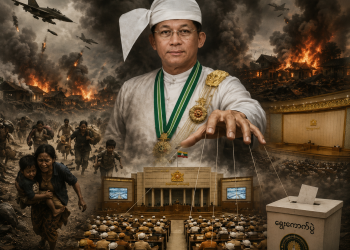
In this political theatre, President Win Myint and State Counsellor Aung San Suu Kyi remain the most valuable “trading chips.” Analysts suggest that the junta may soon transition Ms. Suu Kyi to house arrest to further appease international observers and sow discord among the opposition.
“This is not benevolence; it is survival,” a veteran political analyst told MPA. “By manipulating the status of these icons, the junta forces the National Unity Government (NUG) and ethnic allies into a reactive position, pressuring them toward a negotiating table that favors the military’s terms.”
The NUG now faces a complex crisis. While its legitimacy is built on the 2020 election mandate represented by Win Myint and Aung San Suu Kyi, the continued inclusion of their names in the shadow cabinet has drawn criticism. Some argue that keeping them in the official lineup while they are held by the junta endangers the leaders and traps the revolution in “old-guard politics.”
“There are growing calls for the NUG to stop using the names of detained leaders as political shields,” the analyst added. “For the President to remain ‘De Jure’—a separate, legally mandated head of state—actually provides a stronger international weapon against the junta’s illegitimacy than absorbing his name into a revolutionary structure.”
Evidence of an impending political dialogue is becoming visible. Major Ethnic Armed Organisations (EAOs), such as the Kachin Independence Army (KIA), have begun questioning the junta’s willingness to talk with the NUG, signaling a potential shift from the battlefield to the boardroom. Simultaneously, groups like the Ta’ang National Liberation Army (TNLA) and newly formed coordination bodies are testing the waters for a negotiated settlement.
For the NUG and the Committee Representing Pyidaungsu Hluttaw (CRPH), the danger is twofold: attending talks could be seen as a betrayal of the people’s demand for a total end to military rule, while refusing could alienate international donors and regional partners who are desperate for a political exit to the conflict.
As the junta weaves its web of diplomacy, the “Spring Revolution” remains at a crossroads. Field commanders, CDM participants, and the broader public continue to demand the total eradication of the military system. However, the political leadership must now navigate a pincer movement involving international pressure, junta deception, and the shifting goals of ethnic allies.
The consensus among observers is that the NUG must evolve. To survive this strategic trap, the shadow government may need to pivot away from relying on the aura of past leaders and instead build its authority through transparent leadership and the current performance of its resistance forces on the ground.
In the high-stakes game of Myanmar’s future, the junta is gambling that the international community’s fatigue will lead them to accept a “stable” military-led administration. The resistance’s counter-move will depend on whether they can maintain their unity while redefining what leadership looks like in a post-junta era.