
17 May 2026 By Ko Htar Wae
As the breeze of the Myanmar New Year swept through the country, it carried news that stirred deep emotions and cautious speculation among the public. The release of elected President Win Myint and the transfer of State Counsellor Aung San Suu Kyi from prison to house arrest have left the nation in a state of conflicted joy—a celebration cut short by skepticism.
While many believed the military junta would never release these two key figures, the recent shift has proven that even the most rigid political stances are subject to strategic maneuvering. However, for Aung San Suu Kyi, this is merely a “change of fences”—from a prison cell to house arrest—a half-measure that leaves true freedom out of reach.
Why the Junta Fears Total Freedom
There are two fundamental reasons why the military leadership is hesitant to grant absolute freedom to these leaders:
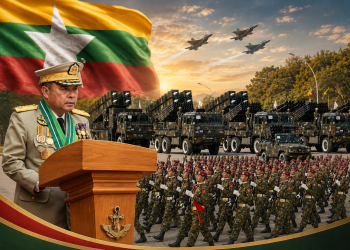
1. The Power of Command: Unlike in the era of previous dictator Than Shwe, today’s resistance is backed by a formidable armed wing—the People’s Defense Forces (PDF) under the National Unity Government (NUG), along with various Ethnic Revolutionary Organizations (EROs). The junta fears that a single “all-out offensive” command from either leader could signal the definitive end of Min Aung Hlaing’s military apparatus. While both leaders have historically championed “peaceful coexistence,” the junta is unwilling to gamble on that restraint.
2. The Battle of Integrity: The military has spent years attempting to brand these leaders as criminals through various fabricated charges. Both Win Myint and Aung San Suu Kyi have maintained their innocence. Accepting a “pardon” or “amnesty” from an illegitimate regime is a complex moral dilemma for them. Furthermore, their release comes under Section 401(1) of the Code of Criminal Procedure, which acts as a “long leash”—a conditional release that allows the junta to re-arrest them at any moment if they are deemed to have “violated” the terms.
A Quest for International Exit
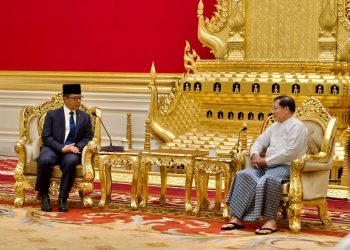
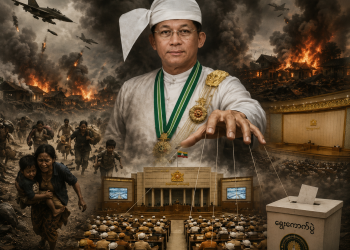
Observers suggest that Min Aung Hlaing is carefully orchestrating these relaxations to find a political exit. By installing a puppet government and easing the detention of high-profile leaders, the junta hopes to:
- Mollify international pressure and gain a semblance of legitimacy.
- Reclaim Myanmar’s seat at the ASEAN table.
The Reality: A Prison by Another Name
Despite the news of President Win Myint’s release being a cause for celebration for his family and supporters, it is far from a total victory for the people of Myanmar. As long as the country’s elected leaders are used as political pawns, the “new chapter” of this New Year remains dimmed by the shadows of authoritarianism.
House arrest is still a form of imprisonment. As the military continues to use these leaders to buy time and international favor, the joy of the public remains stranded halfway. Until Myanmar’s leaders are fully and unconditionally free from the junta’s grasp, the struggle for a true democratic transition continues.