
By JPaing | MPA | April 16, 2026
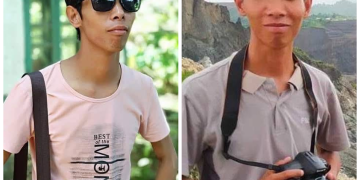
As Myanmar marks the traditional Thingyan Water Festival, a profound internal debate has emerged within the pro-democracy movement. It is a dialogue between the “frontlines” and the “city streets,” represented by two distinct perspectives: Maung Saung Kha, a revolutionary leader in the jungle, and Maung Lu Aye, a civilian struggling to survive in the city.
Empathy and Endurance
From the active war zones, Maung Saung Kha offers a message of immense empathy. He speaks for his fellow resistance fighters, stating that they harbor no resentment toward civilians who choose to celebrate.
“We don’t look at it as ‘we are fighting while they are partying,'” he explains. For the soldiers in the trenches, their presence on the frontline is a self-chosen duty for a future where justice prevails. Understanding the suffocating reality of life under military rule, the revolutionary leadership encourages the public to seek moments of joy to relieve their mental exhaustion. In their view, a civilian’s smile is a reminder of exactly what they are fighting for.
Dignity and the “Shame of the Slave”
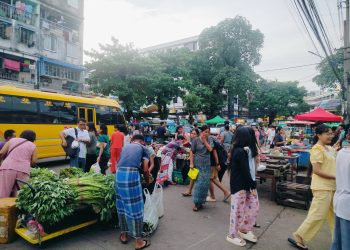
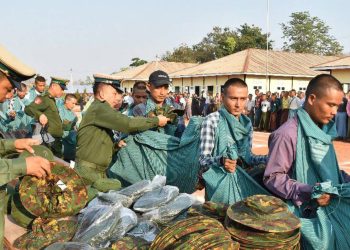
Conversely, Maung Lu Aye, a resident of the city, provides a harsher, more grounded critique. His daily life is a constant struggle against the junta’s machinery—paying “protection money” to avoid forced conscription and living in fear of the next lottery draw for military service.
For him, dancing at junta-sponsored pavilions is not mere “celebration”; he calls it “injecting the DNA of a slave.” He argues that while everyone deserves joy, there is a fundamental difference between private celebration among friends and family and participating in the military’s staged propaganda.
“Don’t go back and drink the ‘Mont Lat Saung’ (traditional dessert) that was mixed with your own heart’s blood,” he warns. His message is a call to political conscience—reminding city dwellers that while they dance at official stages, nearby villages are being razed to the ground.
Resilience of the Spirit
Despite their different tones, both perspectives share a common goal: the preservation of the human spirit.
- Maung Saung Kha emphasizes that resting is not surrendering. He views psychological relief as a strategic necessity to endure a long and grueling revolution.
- Maung Lu Aye emphasizes that joy must not come at the cost of dignity. He advocates for a “pure” celebration—one that ignores the oppressor’s platform and maintains solidarity with those suffering.
A Unified Goal
The revolution in Myanmar is, at its core, a fight for humanity. This includes the right to be happy, to be free, and to laugh. While the soldiers fulfill their duties on the frontlines, the public is encouraged to recharge their spirits—not through the empty spectacles of the regime, but through authentic community and resilience.
Ultimately, both the fighter and the civilian yearn for the same thing: a future Thingyan where the entire nation can celebrate together in true freedom, without the shadows of fear or the burden of a guilty conscience. Until then, the revolution continues—fueled by both the bravery of the soldiers and the quiet, dignified defiance of the people.