
MAGWAY, Myanmar — A growing dispute over the management of strategic oil resources in central Myanmar has exposed internal friction between the National Unity Government (NUG) and local military commanders on the ground.
Reports from Magway Region’s Pauk and Myaing townships suggest that local district-level military officials have begun collecting oil taxes at nearly four times the rate officially mandated by the NUG shadow government. The levies, collected under the banner of a “Regional Military Victory Fund,” have sparked concerns about transparency and the potential erosion of public trust in the resistance movement.
Since April 7, 2026, local commanders in Pakokku District have reportedly been charging 30,000 Kyats ($14 USD) per barrel of crude oil as a “mineral tax.” This figure stands in stark contrast to the NUG’s official rate of 8,000 Kyats per barrel.
“These taxes are being collected without following NUG regulations,” a source familiar with the situation told MPA. “Local administrative bodies and residents are deeply dissatisfied. It raises the question: are these military units bypassing civilian oversight and acting independently of the central government?”
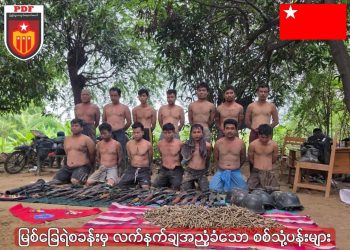
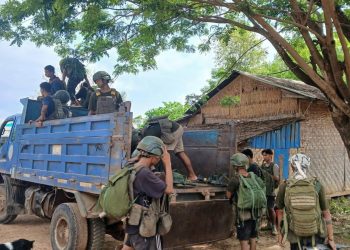
The Magway oil fields are a vital economic lifeline for both local communities and the resistance administration. The surge in taxation follows a period of military tension between NUG-aligned units and local PDF battalions over resource control. Although the NUG and the Interim Magway Federal Unit reached a formal agreement on April 3 to establish a joint regulatory body, implementation on the ground appears to be stalling.
Local sources identified specific district-level commanders as the primary drivers behind the high levies. “This money isn’t reaching the frontline battalions,” another resident added. “It’s being funneled into a separate fund, and similar unofficial tolls are being reported along the Ayeyarwady River transport routes.”
The lack of financial transparency threatens to alienate the very population that sustains the resistance. Traders and local revolutionary members have warned that unless tax collection is standardized and audited, it could lead to avoidable internal conflicts.
“These matters should be handled strictly according to the directives of the NUG and the Magway Federal Unit,” a member of a local resistance group said. “Without clear accountability, we risk creating misunderstandings that only serve our enemies.”
While the NUG issued a statement on April 3 claiming that an agreement had been reached to resolve the management crisis in Pakokku, the continued reports of overcharging suggest a gap between high-level policy and grassroots enforcement.
As the civil war enters a more entrenched phase, the struggle to manage high-value resources like oil is becoming a litmus test for the resistance’s ability to govern effectively and maintain its moral authority in the eyes of the public.