
YANGON, Myanmar — Following a high-level leadership shuffle within Myanmar’s military, the nation has seen a dramatic surge in aerial bombardments, with the new Commander-in-Chief reportedly deploying larger fleets of fighter jets to strike resistance-held territories and civilian infrastructure.
General Ye Win Oo, who officially took over the role of Commander-in-Chief from Min Aung Hlaing on March 30, 2026, appears to have marked his debut with an intensified air campaign. Monitoring groups report that the military is now frequently deploying between two and five fighter jets per mission—a significant escalation from previous patterns.
The first week of April has been characterized by a series of deadly strikes. On April 1, in Thandwe, Rakhine State, a coordinated assault by four fighter jets and a naval vessel resulted in the deaths of an entire family of four, including two children. According to the Arakha Army (AA), a pregnant woman and two other children were also severely injured in the raid.
The AA has characterized this event as the first major war crime committed under General Ye Win Oo’s direct command, signaling a continuation—and possible intensification—of the military’s “scorched earth” policy.
The bombardment has not spared medical or religious sites. On April 2, five fighter jets launched a massive 12-round strike on a hospital near the Bodhi Tahtaung landmark in Monywa. Just days later, on April 6, a Buddhist monastery in Shwebo Township was hit by jets launched from Meiktila and Tad-U airbases, killing a monk and a female civilian.
“The military is becoming increasingly aggressive in targeting hospitals and civilian areas,” a local resident from Shwebo told MPA. “They struck Sin Inn village on the 3rd and again on the 6th. The destruction is immense.”
In Magway Region, the military utilized its air power to strike the Phalan Koing oil field on April 4. Despite no ongoing clashes in the immediate vicinity, jets from Meiktila and Magway airbases rotated to drop bombs, killing six members of the People’s Defence Forces (PDF).
“There was no fighting, but they seized the opportunity to sow chaos at the oil field,” a local woman said. The strikes have continued into this week, with residents reporting further bombings on the Pondaung mountain range.
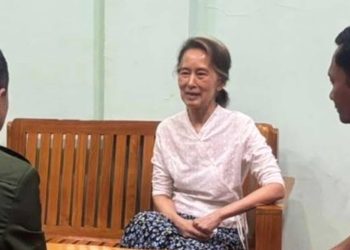
General Ye Win Oo is a familiar figure in Myanmar’s recent history; he was notably responsible for leading the raid on the residence of ousted leader Aung San Suu Kyi during the 2021 coup. While he oversees the air campaign, domestic policies are also tightening. In Yangon, residents report a sudden increase in the mandatory conscription quota, with some wards being ordered to provide ten recruits per month amidst a surge in arbitrary arrests on the streets.
Military analysts suggest that the increased reliance on multi-jet formations is a calculated move to exert maximum psychological and military pressure on opposition forces. However, as the death toll among civilians continues to rise, the “new era” under General Ye Win Oo is proving to be just as bloody as the one that preceded it, further isolating the sham government from both its own people and the international community.