
By Mon Lay / MPA
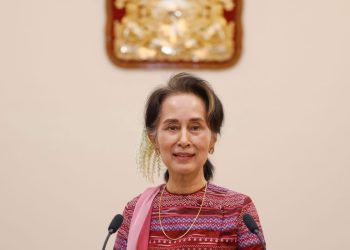
Throughout the reigns of military leaders Saw Maung, Than Shwe, and now Min Aung Hlaing, Daw Aung San Suu Kyi has remained their greatest threat. As a symbol of democracy, the daughter of the nation’s independence hero, and a Nobel Peace Prize laureate, her political stature stands in stark contrast to dictators who rule through force and fear.
Beyond politics, even her academic credentials—an Oxford graduate and honorary doctorate holder—have often sparked a deep-seated insecurity among military leaders hailing from the Officer Training School (OTS) or the Defence Services Academy (DSA). The genuine love the public feels for her is a reality that dictators, despite decades of effort, can neither buy nor manufacture. Consequently, her repeated detentions have been prolonged not just by political opposition, but by the personal envy festering within these dictators.
The Unchanging Cry for Freedom
The slogan “Free Aung San Suu Kyi and all political prisoners” has been a constant refrain of the revolutionary masses since the era of Senior General Than Shwe. While there was a brief period of hope during President Thein Sein’s administration following her release, the call returned with renewed urgency after the military coup led by Min Aung Hlaing on February 1, 2021.
By 2025 and 2026, these demands have intensified. This is driven partly by international pressure and partly by the vocal concerns of her son, Kim Aris (Ko Htein Lin), who has publicly questioned her health and whether she is even still alive.
Min Aung Hlaing’s Psychological Paradox
Min Aung Hlaing and his inner circle harbor a profound resentment toward her. Yet, interestingly, the military leader appears to subconsciously treat her as a role model. When he could not earn the international accolades she possesses, he reportedly ordered subordinates at Yangon University to fabricate and bestow honorary titles upon him—a move widely seen as a clumsy attempt at imitation.
While Aung San Suu Kyi possesses the natural affection of the people, Min Aung Hlaing attempts to manufacture a narrative of being “loved.” This was most evident during his staged election activities, where hand-picked supporters were coached to praise him in front of cameras.
Attempts at “Character Assassination” and Physical Harm
Military regimes have long sought to eliminate her influence. The 2003 Depayin Massacre was a cowardly attempt by the Than Shwe regime to assassinate her using state-sponsored thugs.
When physical assassination failed, they turned to “character assassination.”
- 2009: After American John Yettaw swam to her lakeside home, the regime attempted to imply a scandalous personal connection to tarnish her dignity.
- 2017: During the Rohingya crisis, the military leadership carried out a pre-planned genocide but allowed the global blame to fall squarely on Daw Aung San Suu Kyi and the NLD government. This successfully damaged her international reputation and led to the revocation of several global awards.
Is the “Mother of the People” Still Alive
Historically, the military junta avoids letting a figure of her stature die while in their direct custody, fearing the domestic and international fallout of a Nobel laureate dying in a prison cell. They prefer to use proxies for physical attacks when she is free, but focus on destroying her image when she is detained.
Since the 2021 coup, attempts to brand her as a “vote thief” or corrupt official have failed to sway a public that maintains absolute faith in her integrity. Now, the junta has turned to a new tactic: enforced silence.
By cutting off all communication—even with her son—and allowing rumors of her death to circulate within military circles, the junta hopes to create a fog of uncertainty. They are gambling on the Burmese proverb, “Out of sight, out of mind,” hoping the public will eventually forget her existence.
Conclusion: A Legacy Beyond Walls
Whether Daw Aung San Suu Kyi is currently alive remains unconfirmed by any independent source. However, what the military cannot kill is the image of her that lives in the hearts of the people.
If the revolutionary public continues to uphold her principles and courage, the day will come when the “human jewel” they have hidden away will be forced back into the light. As the famous poetic defiant phrase goes: “The water hyacinth floats on, clenching its teeth, still wearing its flower.”
Edited by: Ko Sann