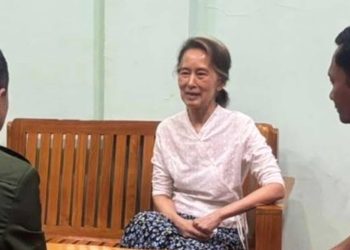

YANGON, Myanmar — A new coalition of veteran politicians and activists has formed the Political Coordination Body (PCB), calling for the immediate and unconditional release of ousted leader Aung San Suu Kyi and President Win Myint as a primary step to resolving Myanmar’s protracted conflict.
In its inaugural statement (1/2026) released on Friday, the PCB—established in February 2026—outlined a nine-point roadmap aimed at finding a political exit for the nation, which has been gripped by civil war since the 2021 military coup.
The group, which includes prominent figures such as veteran 88-generation activist Ko Mya Aye, Nai Nyunt Lwin, and U Thar Tun Hla, prioritizes the liberation of all political prisoners. Beyond high-profile releases, the PCB is demanding guaranteed freedoms of association and expression for all citizens.
“The PCB could provide a much-needed alternative path,” an elderly political observer in Yangon told MPA. “By centering the release of Daw Aung San Suu Kyi and advocating for political dialogue, there is a renewed hope for the revival of a political role in solving the crisis.”
The PCB asserts that a lasting solution can only be achieved through the drafting of a new constitution that guarantees a federal democratic union. The group announced plans to facilitate inclusive political dialogues involving all key stakeholders to achieve this goal.
However, the proposal faces skepticism from younger generations of activists. “There are questions about whether returning to the negotiating table before the military is fully removed is just falling back into an old cycle,” a young female activist remarked. “But if this truly offers a political way out, it may shift the current ‘no-negotiation’ stance of the revolution.”
Amidst the ongoing violence, the PCB issued a stern warning against targeting non-combatants and essential infrastructure. The body urged all armed actors to refrain from attacking religious buildings, hospitals, and schools.
The group also expressed its intent to collaborate with the international community—including ASEAN, the United Nations, and neighboring countries—to rehabilitate the socio-economic lives of those displaced and affected by the war.
The emergence of the PCB marks a significant development in Myanmar’s complex political landscape. While the revolutionary forces continue their military momentum, the international community and political analysts are closely watching how both the resistance movement and the military junta will respond to this new call for a negotiated settlement led by some of the country’s most seasoned political voices.