
YANGON, Myanmar — Female political prisoners in Myanmar are being subjected to invasive body searches and 24-hour surveillance that amount to sexual harassment and a grave violation of human dignity, according to a new report by the Assistance Association for Political Prisoners (AAPP).
The report, titled “Oppressed Women Behind Barbed Wire,” reveals that women are frequently forced to strip naked in public view during transfers between courts and prisons. Authorities reportedly conduct these searches under the pretext of security, often without any medical basis or proper procedural oversight.
Witnesses describe a traumatic process where guards forcibly touch their bodies, including private areas. In some instances, detainees are reportedly forced to squat over mirrors or undergo internal manual searches.
“When we go to court, they search our entire bodies. They reach inside our bras and touch our genitals,” a former political prisoner stated in the report. “Even when we are menstruating, they force us to remove and show our sanitary pads. It is not about security; it is intended to humiliate and break our spirit.”
The report also highlights the increasing use of CCTV cameras in female wards and even near bathing areas in police stations. These cameras, purportedly for “security,” are allegedly being used by male staff to voyeuristically monitor prisoners or to collect data for blackmail.
“I felt unsafe from the moment I was arrested. In the police station, a camera was pointed directly at the bathing area,” another former detainee shared. “Even when I reached Insein Prison, they installed cameras in our sleeping quarters. We protested that this violated our privacy, but they ignored us. We were never safe, not even while we slept.”
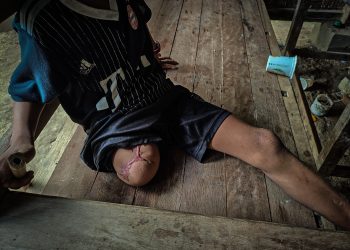
Beyond psychological and sexual abuse, the AAPP documents instances of collective punishment. When female prisoners protest against these conditions, male guards have reportedly responded with brutal force, using iron rods, bamboo sticks, and even electric tasers to beat groups of women.
The humanitarian situation inside the cells is equally dire. A lack of clean water and basic menstrual products has led to a surge in reproductive tract infections and urinary tract diseases. Combined with severe malnutrition and the intense psychological stress of their environment, many women report suffering from chronic health issues and the cessation of their menstrual cycles.
The findings come as the sham government’s military continues its crackdown on dissent following the 2021 coup. According to AAPP data, over 6,000 women have been detained since the conflict began, with many still facing these “subhuman” conditions.
Human rights advocates are urging the international community to hold the sham government accountable for what they describe as “gender-based war crimes.” For the thousands of women still trapped in Myanmar’s penal system, the struggle is no longer just for political freedom, but for the basic right to bodily autonomy and human decency.