
By Bala / MPA
KARENNI STATE, Myanmar — Efforts by the Myanmar military to secure total control over the strategic Union Highway in Karenni State have reached a stalemate, as resistance forces continue to thwart the regime’s attempts to advance, local sources and defense officials say.
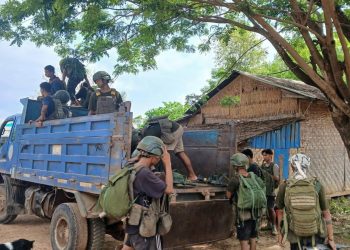
Since March 16, the military commission has reportedly increased its presence along key sections of the highway, attempting to establish permanent outposts and enhance “territorial security.” However, according to a reliable military source, the junta’s control remains fragmented.
“They haven’t secured the entire highway; they’ve only managed to seize certain sections. While large-scale battles are currently absent, small-scale skirmishes remain frequent,” the source noted.
The Karenni Nationalities Defence Force (KNDF) maintains that the military’s multi-year effort to dominate these land routes has largely failed.
An official from the KNDF’s Central Information Department told MPA that despite the regime deploying significant reinforcements to the highway, the resistance continues to restrict their movement.
“The military commission has been trying for years to reopen these routes for their logistics, but we have maintained control to prevent them from using these roads,” the KNDF official said. “Their current push with large forces is a clear attempt to regain ground-based mobility, but they have yet to achieve a breakthrough.”
The tactical deadlock on the highway has triggered a severe economic crisis for local civilians. Since early February, road closures between Phruso, Hta Lay, Nan Phe, and Bawlakhe have effectively severed trade and travel, leaving farmers and internally displaced persons (IDPs) in a dire financial position.
A member of the IDP Committee in Eastern Demoso explained that the blockade has prevented farmers from selling their rice harvests, leaving them without the capital needed for the upcoming planting season.
“Cars haven’t been able to pass since February 6. It’s devastating for patients needing medical care and for local vendors,” the committee member said.
“With the flow of goods from Loikaw cut off, fuel and commodity prices have surged. Farmers are stuck with piles of unsold rice and no cash flow. Usually, they sell to the western regions to fund the next crop, but now they are falling into debt just to cover daily expenses.”
While the military commission has issued statements claiming they will reopen the Union Highway shortly, ground reports suggest they remain heavily reliant on aerial transport for supplies, unable to guarantee safe passage on the ground.
For now, the Union Highway remains a volatile frontline, with the KNDF warning that full-scale clashes could erupt at any moment as they continue their defensive operations.
Editor: Ko San