
The Prime Minister of Myanmar’s shadow National Unity Government (NUG) has revealed that extensive and ongoing negotiations are taking place between revolutionary leadership groups to ensure political alignment as the conflict against the military junta enters its fifth year.
Speaking at the 11th session of the Yangon Federal Unit Parliament on 9 March 2026, Prime Minister Mann Win Khaing Than emphasized that building and maintaining trust among diverse resistance forces has been the key to their progress thus far. “
Throughout five years of highs and lows, we have been able to continue our journey because of the trust we have established,” the Prime Minister said. He added that as the movement approaches potential victory, “closer cooperation and mutual accountability” are essential to achieving the final goal of a federal democratic union.
The parliamentary session—which was also attended by NUG Acting President Duwa Lashi La—formally moved to record the military council’s proposed elections as “illegal.” Members reaffirmed that the only legitimate legislative bodies are those formed by representatives elected in the 2020 general election, which the military overturned in the February 2021 coup.
“The 2020 election results are the political touchstone of the people’s sovereignty and the foundation of our revolution’s legitimacy,” Mann Win Khaing Than stated during the assembly.
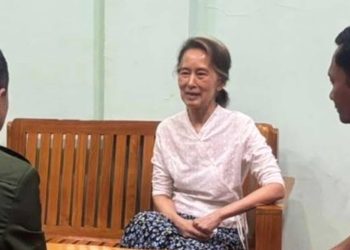
n a significant development, the Yangon Federal Unit Parliament unanimously approved an urgent motion declaring the release of President Win Myint, State Counsellor Aung San Suu Kyi, and all other political prisoners as a “top priority” of the resistance movement.
A Member of Parliament from Yangon, who was elected in the 2020 polls, told the Myanmar Pressphoto Agency (MPA) that while the session was part of their regular legislative work, the formal consensus on prisoner release and the rejection of junta-led elections sent a clear message to both the public and the international community.
The NUG continues to position itself as the legitimate administrative authority in Myanmar, working to bridge political differences between its administration and ethnic armed organizations as they collectively seek to dismantle the military’s grip on power.