
By Mon Lay / MPA
Myanmar’s military leader has enacted a controversial new law establishing a “Union Advisory Council,” a move analysts say is designed to ensure the military retains ultimate control over the incoming administration following recent elections.
The legislation, signed by Senior General Min Aung Hlaing on Tuesday, allows for the creation of a powerful body to “advise and coordinate” with the President on key issues including security, administration, and the judiciary.
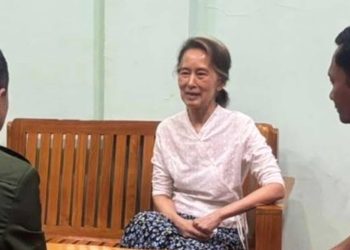
Observers have noted a stark irony in the general’s latest maneuver. The new council closely mirrors the “State Counsellor” position created by the National League for Democracy (NLD) government in 2016 for Aung San Suu Kyi.
At the time, the military vehemently opposed the role, arguing it was unconstitutional. Now, the junta appears to be replicating the exact mechanism it once condemned.
“It is a laughable contradiction,” a political analyst told the MPA. “In 2016, the military argued this structure violated the constitution. Now, despite hating the NLD, they are copying the NLD’s playbook to allow the General to rule from behind the scenes.”
The law was enacted under Article 417 of the constitution, citing emergency powers. However, critics argue that legislating without a parliament violates the core spirit of the charter.
With the military-backed Union Solidarity and Development Party (USDP) claiming victory in recent polls—which have been widely dismissed by the international community as a sham—experts believe this law is a safety net for Min Aung Hlaing.
“Even if he steps down from the presidency, this council allows him to dictate terms to the new government,” said one political commentator. “It is a classic political trick to hold onto power without the accountability of office.”
The new law stipulates that the council will consist of at least five members, including a chairperson, with a term running concurrent to the President’s. Crucially, the law mandates that the President’s Office must facilitate the council’s operations, effectively placing the elected head of state in a subordinate position to the advisory body.
Activists warn that the council, funded by the state budget, creates a formalized, legal channel for the military to continue its dominance over the country’s political landscape while shielding its leaders from prosecution for war crimes committed during the conflict.