
By Hsu Yee/MPA
A human rights monitoring group has pledged to seek justice for two political prisoners who reportedly died in a jail in Myanmar’s Rakhine State after being denied urgent medical treatment.
The Justice Network for Political Prisoners (JNPP) said the inmates, Ko Thein Htun Sein and Ma Saw Tin May, died in Sittwe Prison due to a lack of access to healthcare, a situation exacerbated by severe shortages of medicine.
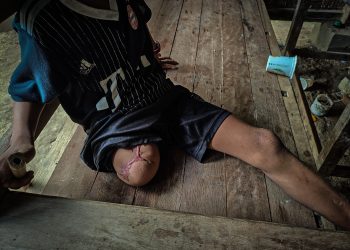
According to the group, Ko Thein Htun Sein, 42, had been suffering from severe abdominal pain for an extended period. Despite his condition worsening—marked by vomiting and visible swelling of the abdomen—prison authorities allegedly refused to transfer him to a hospital until his condition became critical.
He died on arrival at the hospital on 18 November 2025. Ko Thein Htun Sein was serving a 40-year sentence under various charges, including unlawful association and incitement.
The second victim, 32-year-old Ma Saw Tin May, reportedly died in prison in 2025 after injuries she sustained during interrogation were left untreated. She was serving a three-year sentence for unlawful association.
The families were only contacted after the prisoners had already died,” Ma Yu Mi San, a spokesperson for JNPP, told MPA. “They were eventually able to retrieve the bodies for burial about three days later, but the tragedy is that these prisoners received absolutely no medical treatment while they were alive.”
The network claims that Sittwe Prison is facing a catastrophic shortage of medicine.
“Even basic expired medicines are hard to find,” Ma Yu Mi San added. “Usually, they only give out painkillers like Paracetamol or Burmeton for any illness. The authorities claim they have no stock because of transport blockades and communication difficulties.”
The Justice Network for Political Prisoners has announced it is documenting the actions of the prison warden and staff involved in these cases. The group stated it aims to use this evidence to ensure effective legal action is taken against those responsible for the negligence.
The incident highlights the deteriorating conditions within Myanmar’s prison system, particularly in conflict-torn regions like Rakhine, where supply lines are frequently severed.