
By Hsu Yee | MPA Indept PhotoStory
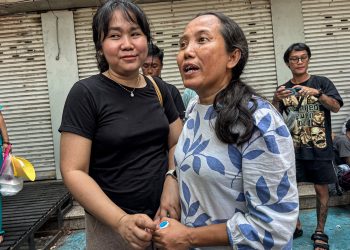
For two months, Ma Khin Lay had waited to go home. When the military column finally left her village in Myanmar’s Sagaing region, she thought the danger had passed. She was wrong.
The 25-year-old mother managed to step through her front door, but she didn’t make it much further. As she reached for a water bucket to start cooking dinner, an explosion tore through the silence of the village.
The military had planted a landmine right at the entrance of her family home.
“I didn’t know what happened at first. My ears were ringing, my vision went blurry,” Ma Khin Lay (not her real name) recalls. “The pain in my legs was unlike anything I had ever felt.”
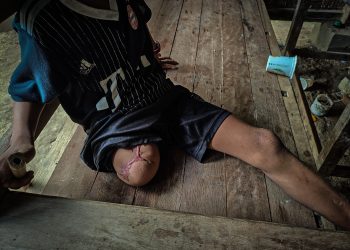
The blast on 31 October 2025 did not kill her, but it changed her life irrevocably. The young mother, who once single-handedly herded cattle and worked the fields, is now an amputee, struggling to navigate a war-torn landscape on one leg.
A perilous journey for help
Ma Khin Lay’s ordeal highlights the collapse of healthcare infrastructure in resistance strongholds like Pale Township.
With her leg shattered and shrapnel embedded in her body, her family could not simply call an ambulance. They faced a harrowing 35-mile journey to find adequate medical care. They travelled by motorbike, tractor, and car, navigating conflict-damaged roads while Ma Khin Lay screamed in agony.
Doctors were unable to save her left leg. Due to the depth of the shrapnel and the risk of infection from the gunpowder, they amputated below the knee.
To pay for the surgery and the 10 days in the hospital, her family had to sell two of their cows—assets meant to secure their future.
'Living is resistance': The young mother maimed at her own doorstep
The emotional toll
For Ma Khin Lay, the physical pain pales in comparison to the emotional distance the injury has created between her and her 18-month-old daughter.
“My daughter sees the white bandages and she gets scared. She won’t dare come near me,” she says, her eyes welling up. “That hurts more than the wound itself.”
She describes the crushing guilt of becoming dependent on her husband and parents.
“I feel depressed. How can I not be? I can’t even protect my own child anymore,” she says. “I used to be so active, herding nine or ten cows by myself. Now, if no one helps me, I can’t do anything.”
‘We just want to go home’
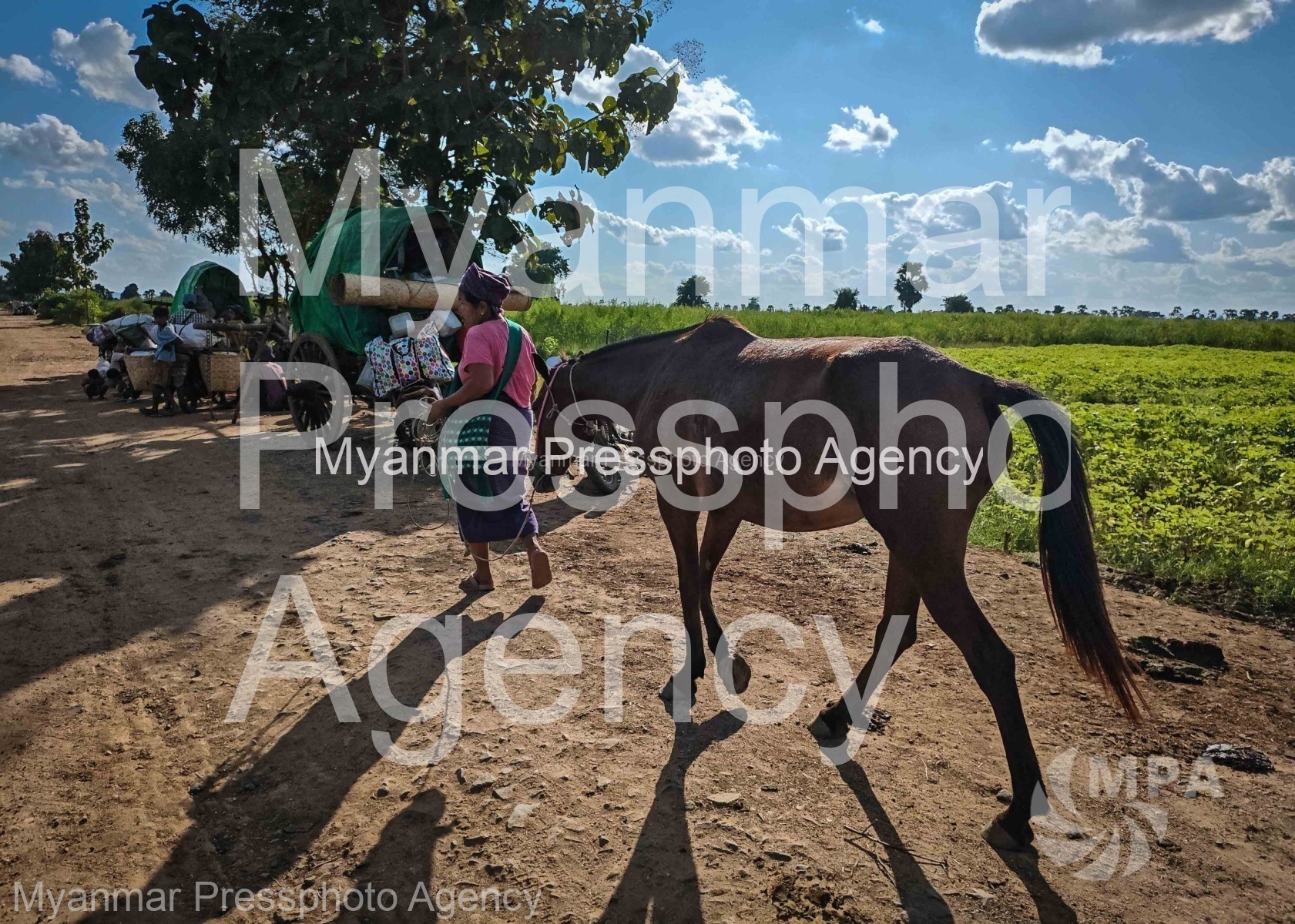
Despite her injury, Ma Khin Lay is once again displaced. Her village remains in the crosshairs of military operations, forcing her family to shelter in a small brick building near a roadside.
They share the space with her parents, brother, husband, and daughter, squeezed in alongside seven other displaced families.
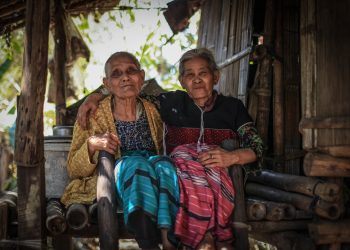
Outside, the scene is one of desperate improvisation. Makeshift tents line the road. Those with ox carts or tractors use tarpaulins to create roofs, sleeping on the ground beneath tamarind and plum trees.
The economic devastation is total. Villagers report that soldiers not only planted mines but also destroyed livelihoods.
“The soldiers used the rice sacks we worked all year to harvest to build bunkers,” says a woman in her 40s sheltering nearby. “The rice is ruined by rain and dew. It’s all gone. It is an act of pure cruelty.”
Resilience amidst ruin
In Pale Township alone, local aid workers estimate there are over 3,000 long-term displaced persons, with another 1,000 fleeing their homes periodically whenever military columns approach.
Resources are scarce. Water, food, and medicine are in short supply, and donor fatigue is setting in. Yet, the community’s spirit remains unbroken.
“We are not the only ones suffering; the whole country is,” says a 50-year-old displaced woman living in a small tent. “If we have to run, we run. If the village burns to ash, so be it. The important thing is that these [soldiers] leave.”
For Ma Khin Lay, survival itself has become an act of defiance. Her husband now tends to her every need, from washing her face to combing her hair, a testament to their family’s bond.
A local People’s Defence Force (PDF) member observes the scene with a grim determination.
“The military may not want the people to survive, but the people are enduring every hardship with a will to live,” he says. “That, in itself, is a revolution against the dictatorship.”