
By Hsu Yee/MPA
Myanmar’s shadow National Unity Government (NUG) has announced a significant expansion of territorial control, claiming its forces and allied ethnic armed groups have fully captured 37 towns across the country.
In a public address on Tuesday, Nay Phone Latt, spokesperson for the NUG Prime Minister’s Office, stated that the resistance movement is “systematically expanding” its influence. In addition to the seized towns, he claimed that a further 41 townships are currently under “blockade and control” by anti-junta forces.
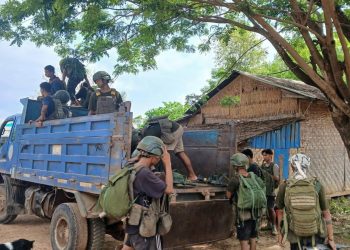
The spokesperson highlighted recent military successes, specifically noting “Operation Aung Myay” in the Bago Region. According to the NUG, resistance forces launched simultaneous attacks on 14 military outposts along the historic Yangon-Mandalay highway.
Further north in Sagaing Region, the NUG claims to have seized more than half of Katha, a strategically important town, effectively dismantling the junta’s administrative machinery in the area.
“The PDF (People’s Defence Force) and local defense groups are now capable of conducting major operations independently while maintaining strong coordination with our ethnic allies,” the spokesperson said.
The report also shed light on the heavy toll the conflict is taking on the Myanmar military (Tatmadaw). According to NUG data for the year 2025:
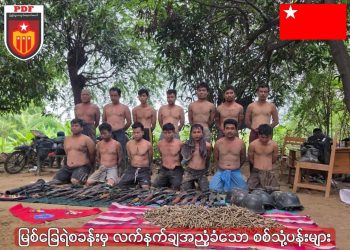
- 9,549 military personnel were reportedly “lost” (killed or incapacitated).
- 536 personnel, including two majors, defected to the resistance.
The NUG attributed the steady flow of defectors to the junta’s forced conscription policy. “Young people forced into service are contacting us as soon as they reach the front lines,” Nay Phone Latt said, describing the trend as evidence of the military’s “internal collapse.”
The announcement follows a January 24 message from the NUG Prime Minister, who praised the growing proficiency of the PDF. He extended formal gratitude to ethnic revolutionary organizations (EROs) for their role in training and supporting the resistance fighters.
While the NUG’s claims of territorial gains are difficult to verify independently due to restricted access in conflict zones, local reports from the ground suggest that the military junta is increasingly confined to urban centers and fortified bases.