
By Bywar Oo / MPA
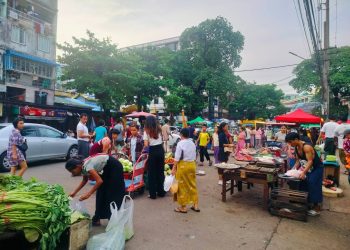
YANGON, Myanmar — Severe fuel shortages accompanied by sudden price hikes have returned to major cities across Myanmar, forcing commuters into long queues and leaving several filling stations completely dry, local drivers and residents confirmed on Sunday.
The current crunch marks the seventh major fuel crisis in Myanmar since the February 2021 military coup, occurring just three months after the previous supply shortage in April.
Public concern is mounting over the broader inflationary fallout, with transport operators and small business owners warning that rising fuel costs will inevitably drive up commodities and everyday living expenses.
“Commuters and daily workers are the ones bearing the heavy brunt,” a commercial transport operator told MPA. “Fares will soar, and operational costs for fuel-dependent businesses will skyrocket. Right now, Octane 92 is unavailable at some stations, while others offer petrol but lack diesel. It is absolute mismanagement.”
According to the junta-controlled Fuel Oil Import, Storage, and Distribution Supervisory Committee’s weekly price index published on 24 July, official reference prices in Yangon were set at 3,350 MMK per liter for Octane 92, 3,460 MMK for Octane 95, 3,560 MMK for regular diesel, and 4,315 MMK for premium diesel.
Compared to the previous week’s rates, official fuel prices surged by 140 MMK to 420 MMK per liter within days.
The latest supply deficit stems directly from policy directives issued by junta chief Min Aung Hlaing in early July, ordering further cuts to foreign currency allocations for fuel and edible oil imports to preserve dwindling foreign exchange reserves.
“They claim they are cutting imports to save foreign currency, but filling stations are not distributing fuel for free—they are reselling it at a profit,” a local taxi driver commented. “Drivers and merchants have no choice; when fuel prices rise, transport fees go up accordingly.”
Authorities continue to enforce a strict QR-code rationing system, capping purchases based on vehicle type and engine capacity. However, drivers report that allocated quotas are grossly insufficient, driving many to source fuel from a rapidly resurfacing black market at double the official price.
“In rural areas outside major cities, the situation will prove far more severe,” a long-distance bus driver operating the Yangon–Mawlamyine route explained. “Refueling stations are not operating at full capacity. If a station has eight pumps, they only run two, which artificially lengthens the queues.”
Myanmar’s post-coup fuel volatility first erupted in April 2022 following the Central Bank of Myanmar’s restrictive foreign exchange regulations. Subsequent supply shocks hit in September 2022, August 2023, November–December 2023, August 2024, and March–April 2026.
Economic analysts warn that without structural foreign currency reforms, Myanmar’s urban supply chain remains exceptionally vulnerable to recurrent fuel paralysis.