
28 April 2026 By Mon Lay
PAKOKKU, Myanmar — The National Unity Government (NUG) is facing renewed calls for accountability after a battalion under its command allegedly tortured and killed a civilian in Magway Region last month.
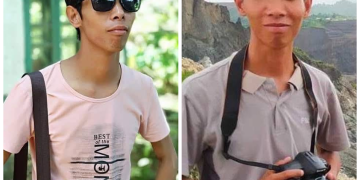
The victim, identified as Ko Win Zaw from Ye Htwet Gyi village in Pauk Township, was reportedly killed while in the custody of Pakokku District Battalion 13. The incident has sparked a wave of local criticism regarding the conduct of resistance forces and the lack of oversight from the shadow government’s Ministry of Defence (MOD).
According to local sources, the events began on 19 March 2026, when Ko Win Zaw was asked by a fellow villager, Ko Kyaw Zin, to accompany him to Kamma Town. Ko Kyaw Zin had reportedly been attempting to extort 1 million Kyats from a local resident through phone threats.
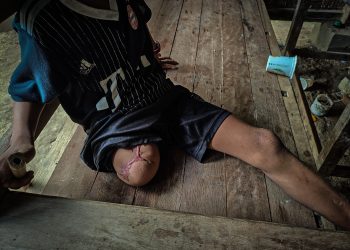
Upon reaching the meeting point, both men were apprehended by members of Battalion 13, who were acting in coordination with the extortion victim. While Ko Kyaw Zin remains in detention, the body of Ko Win Zaw—who was reportedly only an unwitting companion—was returned to his family two days later.
“His body showed clear signs of severe torture,” a village official told MPA. “He was just an innocent man caught in the middle.”
Despite formal complaints filed through various levels of the People’s Administration and Security bodies, local officials have reportedly stated they face “difficulties” in taking action against the military battalion.
Efforts by MPA to reach NUG spokespersons, including U Nay Phone Latt, for a response have so far been unsuccessful. Although the NUG Press Office initially promised to provide information, no official statement has been released regarding the case.
The incident has highlighted what some activists describe as a systemic failure to discipline NUG-affiliated units. “There is a perception on the ground that the MOD hides crimes committed by its own battalions while only exposing independent local groups,” said a source close to revolutionary forces in Pakokku.
While the NUG has previously established commissions to investigate allegations of war crimes and human rights abuses, residents in conflict zones say these rarely lead to visible prosecution or justice for victims.
“In a revolution, you cannot just kill people without due process,” a local woman from Pauk Township told MPA. “We need to ask: can people be murdered just because it’s under the banner of the revolution? The NUG must control its troops.”
As Myanmar’s civil war enters its fifth year, the pressure is mounting on the pro-democracy leadership to prove that its forces are fundamentally different from the military junta they seek to replace—especially when it comes to the protection of civilian lives and the rule of law.