
27 April 2026 By Crystal
“Surviving in this broken era feels like a never-ending nightmare. We console ourselves only with the grim realization that as long as the dictatorship remains, things could get even worse.”
These are the words of a 30-year-old woman living in Yangon, capturing the exhaustion that permeates Myanmar’s urban centers more than five years after the military coup.
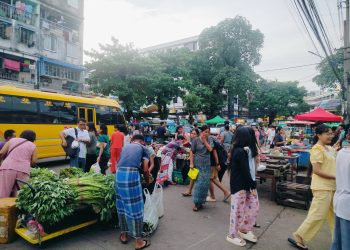
To an outside observer, cities like Yangon might appear to have returned to some form of normalcy. Cafes are bustling once again, and public festivals draw large crowds. However, this appearance of stability is a deceptive veneer—a forced “normalization” where citizens mask their inner trauma with a daily performance of survival.
The Illusion of Peace
During the recent Myanmar New Year (Thingyan), the military junta attempted to project an image of peace and national stability through grand water festivals. But for many residents, these celebrations were merely a temporary escape from suffocating psychological pressure.
“Seeing people celebrating on the streets, one might think we have forgotten everything,” says the Yangon resident. “But the truth is, the moment we return home at night, the fear of guest-list inspections and the anxiety over rising fuel prices come rushing back.”
Life by the Schedule of Power Cuts
As dusk falls, the soundtrack of the city is no longer the song of birds, but the persistent drone of generators. Reliable electricity has become a distant dream, and daily life is now dictated by erratic power schedules.
“We struggle with incomes that cannot keep up with soaring commodity prices and work delays caused by blackouts,” she explains. “Investing in solar power is an option only for the elite, as prices have become exorbitant.”
Digital Control and the VPN Habit
The repression extends into the digital realm. Accessing social media now requires the automatic habit of switching on a VPN—a maneuver as routine as taking off one’s shoes before entering a house. This “Digital Normalization” masks a deeper fear of surveillance.
Recent mandates by the military authorities to register mobile phones via the CEIR system have added fresh pressure. “People comply not out of loyalty, but out of the fear of being disconnected from the world,” the woman adds.
A City Under Shadow
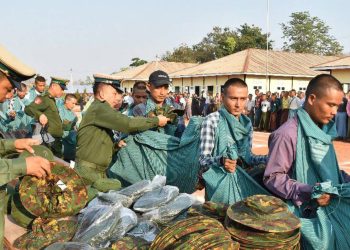
The most acute threat currently haunting urban streets is the “forced conscription” or “portering.” Reports of young people being snatched from public spaces have left the populace in a state of constant vigilance.
“It is a disgrace that the people must fear the very army that is supposed to protect them,” she says bluntly.
Economic decline has further hollowed out the middle class. A 40-year-old man describes the trap: “Nothing has improved. Currency devaluation, fuel hikes, and a lack of jobs have led to a rise in petty crime. Even the middle class is struggling to survive; one can only imagine the hardships faced by those at the bottom.”
Fading Hopes
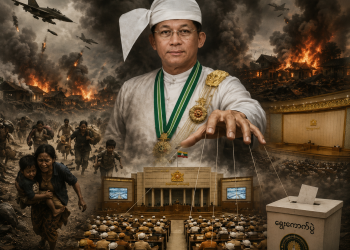
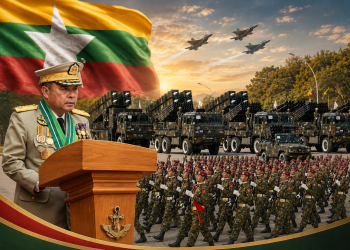
The recent move by military leader Min Aung Hlaing to assume the presidency has further dimmed hopes for a political resolution. For many, this represents a deepening of the crisis and a tightening of the legal shackles used to maintain power.
Despite the outward appearance of “business as usual,” the psychological toll remains heavy.
“The trauma of seeing innocent people and children suffer every day is something we will never get used to,” residents say. Their daily prayer remains simple: to escape this era of forced normalcy and return to a life where they can once again dream of a future without fear.