
27 April 2026 By Nway
SAW TOWNSHIP, Myanmar — The Myanmar military has established a permanent outpost in Magway Region’s Saw Township, effectively seizing control of a critical supply line connecting central Myanmar to the conflict-ridden western states of Chin and Rakhine.
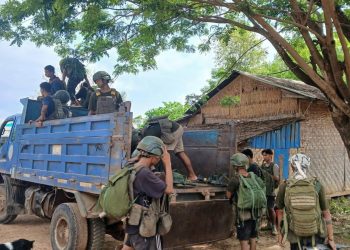
Local sources confirmed that approximately 200 soldiers from the Artillery Battalion 368 based in Kyauktu moved into Kan Gyi village on 25 April. The troops have since entrenched themselves, setting up checkpoints at major intersections within the village to monitor and restrict the movement of people and goods.
“This route is essentially the economic lifeline for Chin and Rakhine states,” a source close to local resistance forces told MPA. “By occupying this specific village, the military has successfully cut off a major commercial artery. Without the steady flow of goods, commodity prices will skyrocket, and civilians already suffering from the war will face even deeper hardship.”
Kan Gyi village is strategically located 19 miles from Saw, 7 miles from Kyauktu, and just 13 miles from Mindat in Chin State, making it a pivotal transit point for trucks carrying fuel, food, and medical supplies to the mountainous borderlands.
Since the occupation began three days ago, soldiers have been conducting thorough searches of passing vehicles. While there are as-yet unconfirmed reports of a cargo truck from Paletwa being detained, no large-scale arrests have been officially recorded. However, the presence of the outpost has already brought regional commerce to a virtual standstill.
In response to the military’s move, local resistance groups issued an emergency travel advisory on Monday, 27 April. Civilians have been warned to avoid the Saw-Kyauktu and Kan Gyi-Mindat road segments indefinitely to avoid being caught in potential crossfire or arbitrary detention.
The military’s decision to station troops in Kan Gyi is seen by analysts as part of a broader strategy to starve resistance-held areas of essential resources. With much of Chin State and large portions of Rakhine under the control of ethnic armed organisations, the junta has increasingly resorted to blockading land and water routes to exert pressure on both the rebels and the civilian population.
For the residents of Saw Township and the mountain communities beyond, the new military outpost represents a daunting barrier to survival. As the blockade tightens, the struggle for basic necessities in western Myanmar is set to become as fierce as the frontline combat.