
18 April 2026 By Ko Myo
NEW YORK, USA — United Nations Secretary-General António Guterres has “taken note” of the release of Myanmar’s democratically elected President Win Myint, while intensifying calls for the immediate freedom of Daw Aung San Suu Kyi and all other arbitrarily detained political prisoners.
The President was among 4,335 inmates granted amnesty by the military junta on April 17 to mark the Burmese New Year. However, the UN chief emphasized that a handful of releases is insufficient to resolve the country’s deep-seated political crisis.
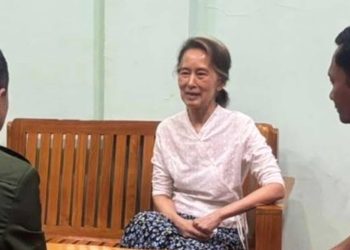
A spokesperson for the Secretary-General stated that Mr. Guterres continues to demand the unconditional release of State Counsellor Aung San Suu Kyi. “The Secretary-General stresses the need for meaningful steps to foster a credible political process and remains committed to seeking a comprehensive solution to the crisis in Myanmar,” the spokesperson said.
The release of President Win Myint, who has been in custody since the February 2021 coup, was marred by the junta’s refusal to use his formal title. Official state announcements referred to the veteran leader simply as “Inmate Win Myint,” a move widely condemned by pro-democracy advocates.
Speaking to MPA, an elected lawmaker from the 2020 Mandalay Region Parliament described the junta’s language as a reflection of its “inferiority complex and lack of political goodwill.”
“Even in releasing our President, they tried to diminish his standing by treating him like a common criminal,” the lawmaker said. “This is not a sign of reconciliation; it is a sign of a regime that remains hostile to the democratic will of the people.”
Despite the high total number of releases, monitoring groups suggest the amnesty was largely focused on non-political inmates. According to the Political Prisoners Network Myanmar (PPNM), only 165 political prisoners have been confirmed as released as of Friday afternoon.
The military junta, led by Senior General Min Aung Hlaing, has used seasonal amnesties in the past to deflect international criticism, but human rights groups argue these are “revolving door” policies. Thousands of activists, students, and peaceful protesters remain behind bars in conditions that the UN and other international bodies have repeatedly flagged as dire.
As the country enters a new year, the international community’s focus remains on whether the release of President Win Myint signals a genuine opening for dialogue or is merely another calculated move by a regime seeking to buy time amidst a failing economy and a nationwide armed resistance.