
12 April, 2026 By Mon Lay
PAKOKKU DISTRICT, Myanmar — A deepening rift between resistance units over the control of strategic oil fields in central Myanmar has led to a series of desertions and a significant drop in public morale, according to local sources and military insiders.
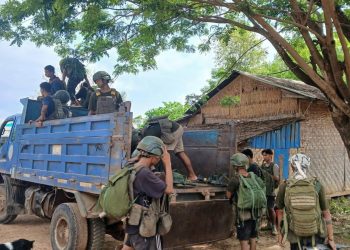
Tensions flared in late March 2026 when approximately 300 personnel from battalions under the National Unity Government (NUG) were deployed to oil-producing areas in Myaing and Pauk townships. The move sparked an immediate standoff with local resistance forces already stationed in the area, who viewed the deployment as an attempt at unilateral control by the shadow government’s Ministry of Defence (MOD).
Local observers report that at least 20 soldiers from the newly arrived NUG battalions have abandoned their posts since the standoff began. “Many frontline fighters are unhappy with this military posture against our own allies,” a source close to the Pakokku resistance told MPA. “They were brought here under the guise of an offensive, but found themselves in a stalemate with fellow revolutionary forces. This disillusionment is driving them to desert.”
The internal crisis comes at a precarious time. Military junta-aligned propagandists have seized on the infighting, calling for a swift return of junta administration to the region. Analysts warn that the standoff provides a strategic opportunity for the Myanmar military to launch counter-attacks while resistance focus is divided.
For the residents of Myaing and Pauk, who have endured years of conflict and economic hardship, the sight of allied forces pointing guns at each other has been devastating.
“The people are losing heart,” a 45-year-old resident of Myaing said. “We want them to fight the junta, not each other. In these difficult times, we need our leaders to look at the suffering of the people instead of fighting over resources.”
The tension has already resulted in tragedy. On April 4, while resistance groups remained locked in their internal dispute, the military junta launched a heavy airstrike using five fighter jets on a location in northern Pauk. The attack killed six PDF members and wounded three others, highlighting the vulnerability caused by the lack of unity.
A coalition of 21 civil society organisations and local administration bodies has issued a formal appeal to the NUG and the Interim Magway Federal Unit to resolve the resource management crisis through dialogue. They warned that if the situation is not addressed through political compromise, it could evolve from a short-term friction into a long-term, armed internal conflict.
As the NUG continues its efforts to establish a formal administrative structure, the crisis in the Magway oil fields serves as a stark reminder of the complexities of governing a fragmented resistance movement. For the NUG, the challenge is now to restore discipline within its ranks and regain the trust of a public that increasingly fears being caught in the crossfire of its own liberators.