
NAYPYIDAW, Myanmar — In a move widely dismissed by international observers as a “pre-planned political theater,” Myanmar’s coup leader, Senior General Min Aung Hlaing, has been officially named the country’s President by a military-controlled national assembly.
The decision was finalized on Friday, April 3, 2026, during the third session of the Union Parliament—an institution born out of elections that were condemned globally as fraudulent. The military chief secured the presidency through a “secret ballot” where he faced no genuine opposition.
Min Aung Hlaing reportedly secured over 400 votes from the 584 lawmakers present, easily defeating two subordinates: General Nyo Saw and Nan Ni Ni Aye. While initial counting briefly showed Nyo Saw in the lead, the final tally shifted decisively in favor of the military chief, confirming widespread suspicions that the outcome had been arranged well in advance.
Crucially, Min Aung Hlaing did not participate in the general election but was nominated by the People’s Assembly, where the military-backed Union Solidarity and Development Party (USDP) and military appointees hold a crushing majority.
The move has drawn stinging criticism from both local political analysts and international human rights groups. “This is a man who turned the country into a bloodbath, now simply changing his uniform for a presidential suit,” one local analyst remarked. “It is a total insult to the will of the people.”
Activists in Yangon and abroad have declared the appointment illegal. “A murderer being named President is a permanent black mark on Myanmar’s history,” a youth activist told MPA. “The international community must not recognize this sham administration.”
The ASEAN Parliamentarians for Human Rights (APHR) and other international bodies have already condemned the proceedings. Critics argue that the move is a desperate attempt by the military to secure a degree of diplomatic legitimacy as the nation’s economy and security collapse under its rule.
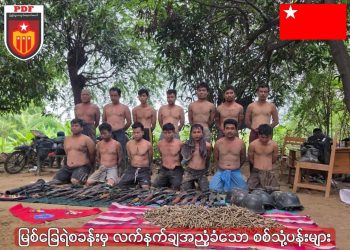
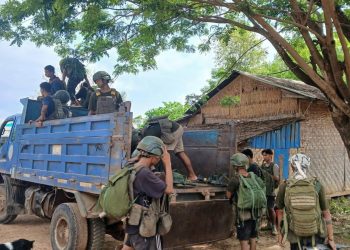
Since the 2021 coup, Myanmar has been gripped by a brutal civil war. Resistance forces have seized significant swathes of territory, leaving the military’s control confined largely to urban enclaves. For residents in war-torn Sagaing Region, the political maneuvering in the capital feels worlds away from their reality. “Our villages are burning, and people are starving, yet they are only interested in assigning themselves titles,” a resident said.
While Min Aung Hlaing may have secured the title of President, analysts believe it will do little to end the conflict or solve the country’s isolation. In reality, the move is expected to embolden the resistance, which views the “new” government as merely an extension of the same military dictatorship.
As the shadow National Unity Government (NUG) and external advocacy groups call on the United Nations to reject the credentials of this new administration, the country remains in a state of profound uncertainty. For many, this presidency marks not a new beginning, but a deepening of the darkness that has engulfed Myanmar since the generals first seized power.