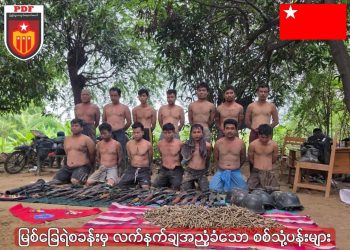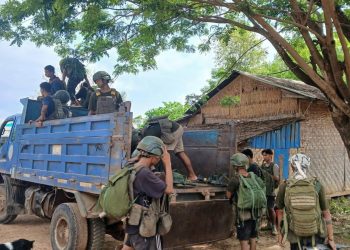

YANGON, Myanmar — The Myanmar military has intensified a targeted psychological warfare campaign against the families of resistance fighters, attempting to force defections from the People’s Defence Forces (PDF) as the nation’s civil conflict enters a more desperate phase.
Local reports and resistance commanders indicate that in junta-controlled areas, security forces are systematically pressuring the parents and relatives of PDF personnel, using a combination of intimidation and promises of amnesty to lure fighters back into legal folds.
Ko Wai Moe Kyaw, a strategist from the TRI Tactical Unit, described the move as a calculated effort by the military’s psychological operations department. “The junta is implementing a strategic plan to pull PDF soldiers out of the revolution by coercing their families,” he stated in a social media update. “It is a deliberate attempt to break the morale of the resistance from the inside out.”
The TRI strategist added that while such pressure might lead to some desertions among less committed fighters, the movement would not be deterred. “We are not mourning the loss of those with weak spirits. Our protocols for deserters remain strict, and those who betray the revolution will face the consequences,” he warned.
The tactic puts civilians in an impossible position. One parent of a PDF soldier, speaking on condition of anonymity, confirmed that authorities have repeatedly approached them to act as intermediaries. “The army wants us to call our children back. But we respect our children’s decisions. Every parent wants their child to stand with dignity rather than betraying their cause for the sake of the family’s immediate safety.”
Military analysts believe the escalation in psychological tactics reflects the junta’s growing personnel shortages and its inability to secure decisive victories on the battlefield. By using families as leverage, the military hopes to sow seeds of suspicion and distrust within resistance units.
“The military is using every tool at its disposal to crush the spirit of the PDF,” one military analyst told MPA. “However, this campaign might inadvertently act as a filtration process, weeding out those whose commitment to the revolution is not absolute.”
The TRI Tactical Unit emphasized that its loyalty lies with the steadfast soldiers and the “martyrs” who have already sacrificed their lives. For the thousands of young men and women in the resistance, the junta’s new focus on their families represents one of the most personal and challenging trials of the ongoing revolution.
As the conflict shows no signs of abating, the use of such coercive tactics against non-combatant relatives is expected to draw further condemnation from international human rights monitors, who have long documented the military’s use of “collective punishment” against those perceived to be opposing its rule.