
By Hlaing / MPA
In the final week of March, the early tremors of Myanmar’s summer are already being felt. While the heat has yet to reach the blistering peaks expected in April, the sun is already proving fatal for those trapped in the country’s relentless fuel queues.
For Ko Min Thu and his group of four companions, the day begins at 3:00 AM. Despite the early hour, they arrive to find a queue of over 150 motorbikes already stretching nearly half a mile into the darkness.
It takes five and a half hours of waiting to secure just two litres of petrol—roughly 7,000 kyats’ worth. On the black market, the price doubles to 8,000 kyats per litre, and even then, supply is never guaranteed.
“I’m nearly 60. At my age, I simply cannot withstand the midday sun,” Ko Min Thu says. “I choose the exhaustion of the early hours over the heat of the afternoon. Because of the odd-even rationing, on the days I can’t buy fuel, I just stay home.”
A “Queueing Nation” at its Breaking Point
The sentiment is echoed by many across the country who feel the social fabric is being stretched to a snapping point. “The odd-even system and these queues need to be abolished immediately,” says Ko Myo Tun, another man in line. “The working class is suffering beyond measure.”
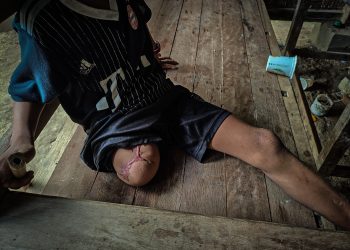
But for some, the cost of a few litres of fuel has been their lives. In late March, a string of fatalities linked to the heat and the physical toll of waiting has sent shockwaves through the community.
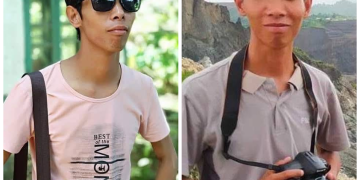
- March 26: U Patrick Tin Htun, a 69-year-old well-known singer working as a taxi driver, was found dead behind the wheel of his car while waiting in a fuel queue.
- March 25: In Mandalay, a 61-year-old woman collapsed and died shortly after returning home from hours of waiting on the Sagaing-Mandalay road.
- March 23: A 40-year-old motorbike taxi driver in Mon State died of low blood pressure and exhaustion immediately after securing fuel for his bike.
“Who Dies, Dies”
The ruling military commission’s perceived indifference to these deaths has sparked outrage. For many, it is seen as a callous disregard for human life.
“We queue for palm oil, we queue for cash at the banks, and now we queue for fuel,” says a resident of Mingaladon. “The authorities ignore the fact that most people cannot afford EVs or solar power. It feels like they only care about their own survival—whoever else dies, dies.”
Medical professionals, including doctors from the Civil Disobedience Movement (CDM), have warned that the peak hours between 12:00 PM and 4:00 PM are particularly dangerous. They advise queueing citizens to carry electrolyte drinks and avoid immediate cold-water baths after returning from the heat, though they admit that for the elderly, the task is inherently life-threatening.
A Return to the “Dark Ages”
The military has recently tightened its grip on fuel distribution, citing the impact of Middle Eastern conflicts. They have introduced a complex web of QR codes for motorbikes, barcodes for cars, and a new restriction allowing individuals to refuel only twice a week.
“They tell us we can get eight litres twice a week for motorbikes,” says a woman from Monywa. “They keep issuing new orders, but we never hear any news of things actually getting better.”
For older citizens, the current crisis is a haunting echo of fifteen years ago, when fuel was so scarce that bikers would chain their wheels together overnight to preserve their place in line.
“I was a manager at a major petrol station back then,” recalls a 45-year-old woman from Yamethin. “I remember the fights and the security guards we had to hire just to keep the peace. No one wanted to go back to those days, but here we are. It feels like the country is moving backwards.”
As temperatures continue to rise and the political stalemate shows no sign of easing, the people of Myanmar remain trapped in a cycle of desperation—where the simple act of keeping a vehicle moving has become a gamble with life itself.