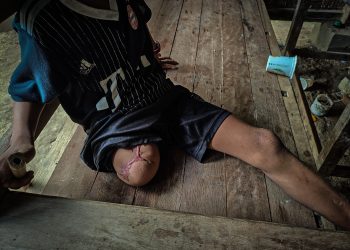

WUNDWIN, Myanmar — Security forces belonging to Myanmar’s sham government have carried out a series of aggressive “portering” raids in Wundwin Township, abducting men from their homes and even while performing religious duties.
The raids, which began in the early hours of March 20, 2026, targeted several villages including Ai Thar, Dar Hla, Nyan Kan, and Shauk Taw. According to Voice of Wundwin, a local monitoring group, at least eight men were snatched during the Friday morning operation.
The arrests were characterized by their arbitrary and ruthless nature. Witnesses reported that some victims were taken while sleeping in their beds, while at least one individual was seized while delivering morning alms (dawn offerings) to a local monastery.
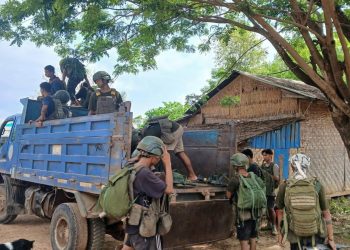
“The troops arrived from Meiktila in two Light Trucks and on motorcycles,” a representative from Voice of Wundwin told MPA. “In Ai Thar village, they took two men—one aged around 20 and another over 35. They are only targeting men.”
As of 09:30 on Friday, the soldiers were reportedly still active in the area, moving between villages to fill their quotas.
This latest raid is part of a sustained three-day campaign by the military in the Wundwin area. Activists estimate that approximately 30 men have been forcibly detained since Wednesday. The captives are typically transported to military bases in Meiktila, a major regional hub for the sham government’s air force and infantry.
The local community remains on high alert. Voice of Wundwin issued a fresh warning on Friday morning after three more trucks, each carrying approximately 15 soldiers, were spotted entering Pin Ta Lae village.
The escalation in forced recruitment—locally known as “portering”—follows the sham government’s activation of a controversial conscription law in early 2024. As the military continues to face heavy losses on various frontlines against resistance forces, it has increasingly relied on snatching civilians to serve as porters, human shields, or frontline infantry.
Human rights organizations have condemned these tactics, noting that they create a climate of pervasive fear, particularly in rural heartlands where young men are now fleeing into the forests or joining resistance groups to avoid being press-ganged into service.
For the residents of Wundwin, the message from the military is clear: neither the safety of one’s home nor the sanctity of religious practice offers protection from a regime desperate for manpower.