
The Myanmar military has intensified its operations in Sagaing Region’s Pale Township, targeting abandoned bases of the National Unity Government (NUG) with drone strikes and carrying out arson attacks on civilian homes.
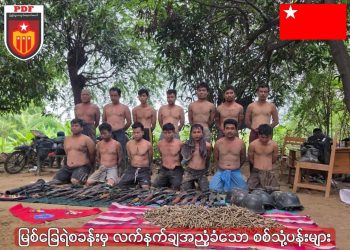
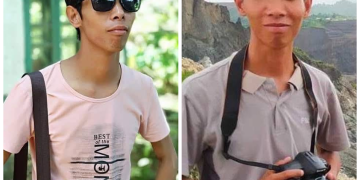
The escalation, which began on 24 February 2026, follows the high-profile surrender of Bo Nagar, the leader of the Burma National Revolutionary Army (BNRA). Bo Nagar reportedly laid down his arms to the military on 18 February, following four hours of clashes between his forces and NUG-affiliated battalions. His surrender was followed on 20 February by other senior BNRA figures, including Vice-Chairman Ko Phyo and Military Officer Ko Latt.
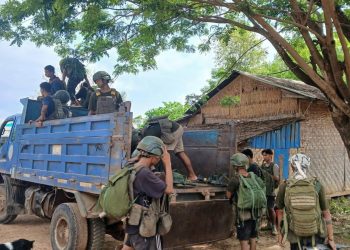
Since these defections, two military columns totaling approximately 400 soldiers have pushed into villages along the strategic Pale-Gangaw road. “The northern column has occupied Nway Inn village, while the southern column is stationed in Chin Pyit Kyin,” a local source told the Myanmar Pressphoto Agency (MPA). “They are using drones to systematically bomb former NUG camp locations in the surrounding areas.”
While no direct ground clashes between the military and remaining resistance forces have been reported in the last 48 hours, the junta’s presence has caused widespread devastation. Soldiers have reportedly torched homes in Nway Inn and Chin Pyit Kyin and are looting food supplies from local residents.
The offensive has forced thousands of civilians to flee. Residents from at least 15 villages, including In Kan, Hnaw Yoe, and Min Tine Pin, are currently seeking refuge in nearby forests. “Almost every village along the Pale-Gangaw road has been evacuated,” a local woman confirmed.
Revolutionary groups in Yinmarbin District have issued warnings to residents in Pale, Salingyi, and Kani townships to remain on high alert for further ground incursions and air strikes. The surrender of the BNRA leadership is seen by many as a significant shift in the local conflict landscape, allowing junta forces to move more freely through previously contested territory.