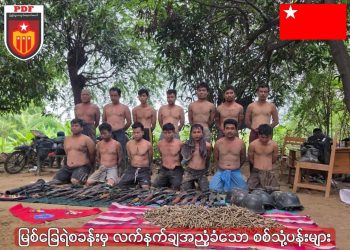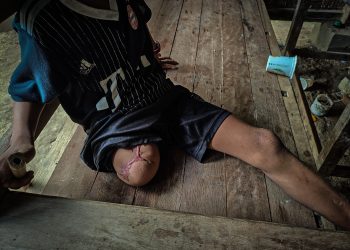

The National Unity Government’s (NUG) local administration in Pauk Township has come under intense criticism from the resistance community after it officially declared 15 personnel as “fugitive deserters” and publicly shared their families’ private details.
In a statement released on 23 February 2026, the Pauk People’s Defense Organization (PDO) listed the names of 15 members who were deemed absent without leave. Critically, the notice included the names of their fathers and their full home addresses, a move that many supporters of the revolution describe as an overreach of authority.
“They aren’t considering the current trajectory or the overall context of the revolution,” a source close to the local resistance forces told the Myanmar Pressphoto Agency (MPA). “Instead of building a sustainable system through dialogue and training, they are resorting to authoritarian tactics. This looks like an abuse of power.”
The publication of personal data has raised significant safety concerns. A female volunteer involved in the resistance supply chain noted that doxing the families of fighters could expose them to severe pressure or retaliation. “By listing family names and addresses, they are following the same playbook as the military dictatorship they claim to oppose,” she said.
The controversy comes at a sensitive time for the NUG, following the high-profile resignation of Daw Kyi Pyar, the Permanent Secretary of the Prime Minister’s Office, on 21 February. Critics have been quick to contrast the treatment of high-ranking officials with that of rank-and-file fighters.
Local residents in Pauk Township have also pointed out the immense hardships faced by those on the frontlines. “These comrades have risked their lives under heavy fire,” said a 25-year-old local resident. “They have their own struggles—financial issues or family crises. These factors should be reconsidered before branding them as criminals.”
Observers note that after five years of conflict, “desertion” and “unauthorized absence” have become more frequent due to burnout, internal leadership disputes, and the mounting economic strain on fighters’ families. While various military regions have issued calls for personnel to return to their units, the public shaming of families marks a significant escalation in how the shadow government’s local bodies manage internal discipline.
The NUG has yet to issue a central response to the backlash regarding the Pauk Township PDO’s specific methods of publicizing personal data.