
By Hlaing and Mon Lay / MPA
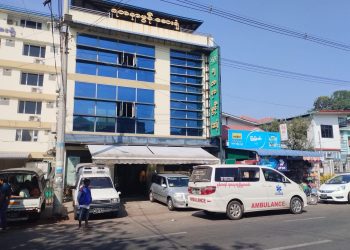
In the dusty outskirts of Yangon, a volunteer fire station has become an unlikely frontline in the struggle to save Myanmar’s youth from a cycle of poverty and crime.
Last week, Daw Myint Myint Than, a widowed cleaner from Hlaing Tharyar Township, arrived at the Pale Auxiliary Fire Station with her young son, Maung Myo Min Thant.
Struggling to support her disabled eldest child on a meager income, she had watched in despair as her youngest fell into a life of petty theft.
Her plea to the fire department was simple: take him in, discipline him, and give him a future she could no longer provide.
The station’s leader, U Htin Linn Aung, moved by the mother’s plight, accepted the boy into their care.
However, the attempt at rehabilitation took a sharp turn on 16 March when the boy fled the station, taking two mobile phones belonging to the volunteer staff with him.
The incident sparked a social media search that ended on Tuesday night when the boy was located and the phones recovered.
Yet, in a rare display of compassion in a country often hardened by conflict, the fire station has decided not to press charges. Instead, they have offered the boy a second chance.
“We understand the struggle of the parents,” U Htin Linn Aung said in a social media broadcast. “For the sake of the family, we will keep him and try to reform him once more.”
The boy’s story is a microcosm of a broader social decay gripping Myanmar.
As the country grapples with post-coup instability and soaring inflation, the traditional family unit is fracturing. Parents, forced to work multiple jobs or long hours to survive, are unable to supervise their children.
“You can’t just blame the children,” noted a local resident in Mingaladon.
“The adults are failing them. Many parents have no control left; they are just trying to put food on the table.”
Education experts warn that the collapse of the formal schooling system is the root cause.
With thousands of children out of school, many have taken to the streets, where they are easily influenced by older peers.
“When they are not in the classroom, they are on the streets. For many, stealing has become a perceived necessity for survival,” said a local teacher.
As social volunteer groups increasingly take on the roles of social workers and educators, the case at Pale Fire Station highlights a desperate need for systemic support.
Without it, observers fear that an entire generation of Myanmar’s youth may be lost to the shadows of an enduring national crisis.