
By Hlaing / MPA
The Myanmar military has moved to occupy the home village of Bo Naga, a prominent former resistance leader, following his high-profile defection to the junta earlier this week. Reports from the ground suggest that troops have begun conducting forced conscriptions and “portering” operations in the surrounding areas of Sagaing Region.
Units from the military commission entered Kyaug Thans village in Pale Township on Friday afternoon, shortly after Bo Naga—leader of the Burma National Revolutionary Army (BNRA)—reportedly surrendered to the regime.
Local sources told the Myanmar Pressphoto Agency (MPA) that the military is now using the village as a base to launch offensive sweeps into neighboring settlements.
Bo Naga’s defection, which followed clashes between his forces and units loyal to the National Unity Government (NUG), has sent shockwaves through the resistance movement. His home village, once a symbol of defiance, is now under the control of the very forces he spent years fighting.
“The soldiers are now stationed in Kyaug Thans,” a 25-year-old resident told MPA. “We hear they are planning to move toward areas where displaced people are hiding. The villagers here are deeply ashamed of Naga’s actions; they feel his surrender has brought disgrace to our community.”
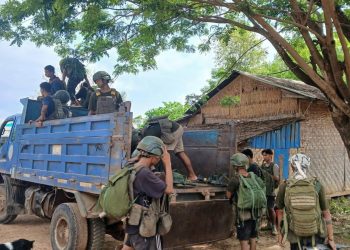
Beyond the occupation, there are harrowing reports of human rights abuses. In Zoung Chan Kone village on Saturday, military units reportedly began a “portering” campaign, forcibly detaining local civilians to serve as human shields or forced laborers for the advancing columns.
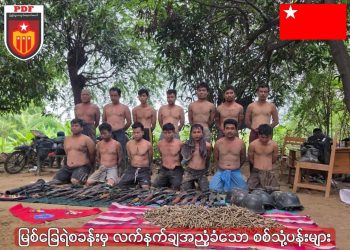
The situation remains fluid as more BNRA members follow their leader in laying down arms. On February 20, the group’s deputy chairman and military chief, along with several other officers, surrendered to junta forces. This was followed by approximately 15 more fighters who were reportedly transported by military vehicles to Pale.
“The defection has cleared the way for the military in Pale,” said a local resistance fighter. “While the military is searching for hidden weapon caches, the civilians are the ones paying the price. People are packed and ready to flee at a moment’s notice as the soldiers expand their presence.”
The NUG has yet to issue a comprehensive statement on the collapse of the BNRA, but the strategic shift in Sagaing—a key battleground in Myanmar’s post-coup conflict—represents a significant challenge for the anti-junta movement.